

Rubber-Coated Magnets: Advantages, How They Work, and 10 Common Uses
Rubber-coated magnets might not be as famous as neodymium magnets, but you run into them all the time in daily life and modern industry. So what's the big deal about them anyway?
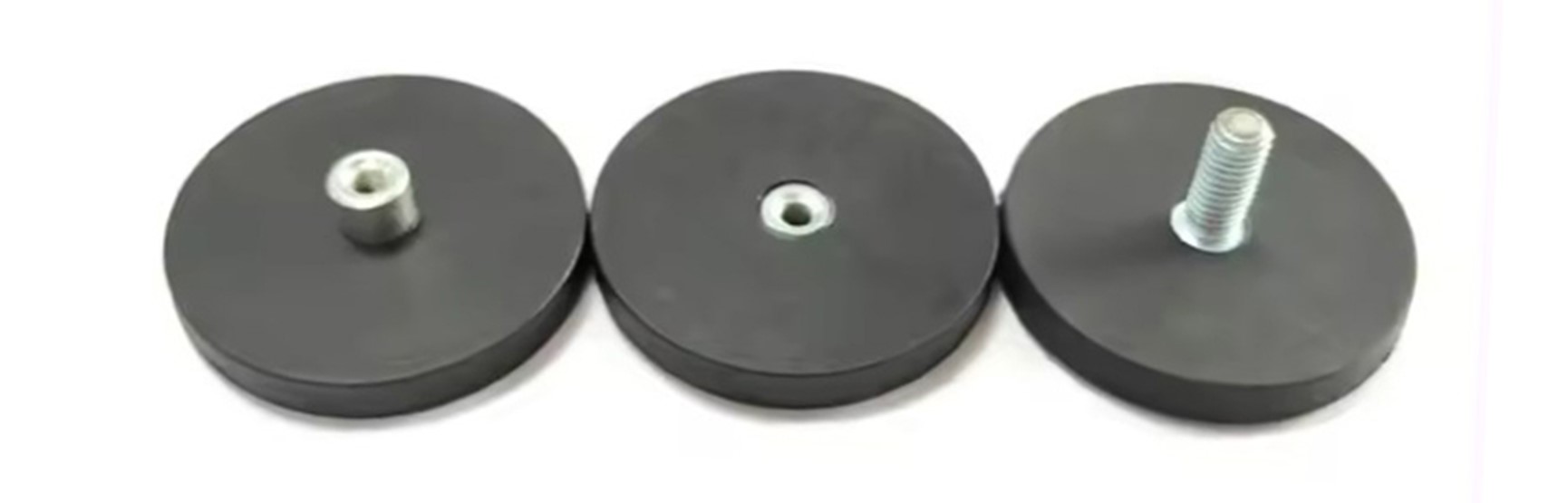
Rubber-Coated Magnets
1. Core Advantages: What Problems Do Rubber-Coated Magnets Solve?
Regular bare magnets—like those black ferrite ones or shiny silver neodymium magnets—have a few built-in problems. They rust easily. They're brittle and chip. They scratch surfaces. And you can't bend them. Rubber-coated magnets were designed to fix all of that.
1.1 Rust Protection, Longer Life
Regular magnets rust fast in wet environments. Neodymium magnets, in particular, can start flaking and losing strength in just a few days. The rubber layer seals the magnet off from air and moisture, so it can hold up outdoors, underwater, or even in mildly acidic or alkaline conditions.
1.2 No More Scratched Surfaces
A bare, hard magnet stuck directly to your refrigerator, car paint, or nice wooden furniture will leave scratches and maybe even dents. The rubber coating gives you a soft contact surface and adds friction—protecting your stuff while also making the magnet grip better.
1.3 Silent Engagement, No Metal Clanking
When two bare magnets snap together, you get that loud "clack." In places like a shower door or refrigerator door, that noise can be annoying. Rubber-coated magnets close softly and quietly, which makes for a much better user experience.
1.4 Flexible Design—Bendable and Rollable
By mixing magnetic powder into a rubber matrix, you can make flexible magnetic strips or sheets that bend, roll, and even get cut to size. That means they can wrap around curved surfaces—like a round oil filter or a pipe—something rigid magnets just can't do.
1.5 Handles Heat and Weather
Depending on the coating material (like EPDM, TPU, or silicone), rubber-coated magnets can work in temperatures from -40°C all the way up to 150°C. They also resist ozone, UV rays, oil, grease, and detergents.
2. 10 Common Uses: Where Do Rubber-Coated Magnets Actually Show Up?
Thanks to all those advantages, rubber-coated magnets are everywhere—in modern industry and everyday life.
2.1 Refrigerator Door Seals
This is the classic, most familiar use. The flexible magnetic strip around your fridge door sticks to the steel body, keeping cold air in while still letting you open the door easily. The flexibility lets it adapt to small door warps and keep a good seal.
2.2 Automotive Oil Filters
On high-performance cars or heavy machinery, you'll often see a black or orange rubber-coated magnetic ring wrapped around the oil filter. Its job is to catch iron particles and metal shavings circulating in the engine oil. If those tiny metal bits keep moving through the engine, they'll accelerate wear on cylinders, piston rings, and other precision parts.
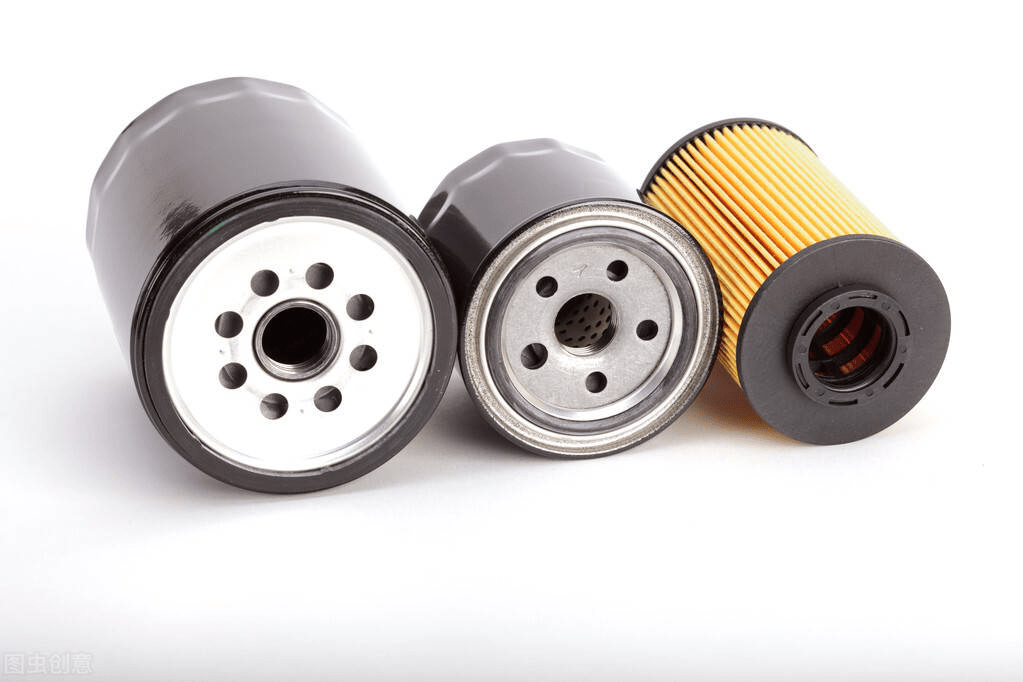
Automotive Oil Filters
The rubber layer does three critical things here: it handles high heat (engine oil can exceed 120°C), protects the filter housing from dents, and keeps the magnet from shifting due to vibration. Plenty of car owners have cut open an old oil filter and found a ring of black "iron sludge" stuck to the inside wall—that's rubber-coated magnets doing their job.
2.3 Shower Doors and Partition Latches
Shower stalls stay wet all the time. Regular metal hardware rusts fast. Rubber-coated magnets are completely waterproof and rustproof. Plus, they close with a soft, quiet "thunk"—no loud clacking, no pinched fingers, no cracked glass.
2.4 Signage and Display Mounts
Price tags on store shelves, magnetic car-top signs, wire covers under trade show carpets—these all use adhesive-backed rubber magnetic sheets or fabric. They stick easily to steel surfaces, swap out cheaply, and won't damage whatever they're attached to.
2.5 Magnetic Tools and Jigs
On woodworking table saws or metalworking machines, you'll often see magnetic fence stops or magnetic bases with rubber-coated bottoms. A craftsman can slap one onto a cast iron table as a positioning stop. The rubber layer keeps the metal base from sliding on that precision ground surface, and it won't scratch the table.
2.6 Electronics and Magnetic Building Blocks
- Tablet cases: Use rubber-coated magnets for smart wake/sleep functions.
- Wireless earbud charging cases: The lid latch uses them for precise alignment.
- Kids' magnetic building blocks: The rubber coating reduces the risk of swallowing a broken magnet (still not zero, but way safer than bare magnets), plus it makes the blocks feel nicer and look cleaner.
2.7 Industrial Pipe Scale Removal and Water Treatment
On factory boiler pipes, cooling water systems, or even residential water lines, you'll sometimes see a rubber-coated magnetic ring clamped around the outside. The idea is simple: it grabs magnetic iron particles (rust, weld slag, construction debris) flowing through the water. No pipe cutting, no extra energy. It's basically an "external physical filter." Great for older pipes that need occasional or long-term iron removal.
2.8 Automotive and Equipment Repair (Parts Retrievers)
Drop a screw or wrench into a tight spot in the engine bay? A long-handled rubber-coated magnet (often called a "retrieval tool" or "pickup tool") can reach into narrow spaces to grab fallen metal parts. The rubber protects nearby wires, hoses, and paint from scratches, and adds a bit of grip on whatever you're picking up.
2.9 Rehab Devices and Prosthetic Connections
On high-end prosthetic limbs or orthotic braces, medical-grade rubber-coated magnets (usually silicone-coated neodymium) are used for quick-attach buckles or closures. The rubber is safe and non-toxic, provides gentle but strong holding force, and makes it easy for someone with one hand to operate.
2.10 New Energy and Energy Storage Systems
Rubber-coated magnets are starting to show up in battery module mounting frames and cable management inside EVs. The rubber offers electrical insulation (so no short circuits) and vibration damping. And because they're magnetic, you can pop them on and off for quick repairs or recycling—a pretty clever feature for the fast-moving new energy industry.
3. Quick Summary
Rubber-coated magnets fix the biggest headaches of bare magnets: they're strong but not brittle, and they don't rust. Anywhere you need magnetic holding power but there's oil, water, risk of scratches, or a curved surface—rubber-coated magnets are the perfect answer.
Stanford Magnetics offers rubber-coated magnets in a variety of shapes and sizes. These are typically made with neodymium (NdFeB), giving you the best of both worlds: the high strength of neodymium and the protective benefits of rubber.