

What Factors Cause Demagnetization of Permanent Magnets? 5 Key Reasons
Ever had a magnet just... lose its mojo? You buy a high-quality one, it works great, then boom, it's weak or totally useless. That's demagnetization.
1. High Heat
Heat is public enemy number one when it comes to magnets.
Every magnet has its limits, basically, how hot it can get before things go south. There's the "max operating temp," which is the highest temperature it can handle and still do its job day in and day out. And then there's the "Curie temperature"—that's the point where it says, "I'm done," and loses all its magnetism.
Here's what's going on inside: when things heat up, the atoms start vibrating like crazy. That jostling messes with the magnetic domains—the tiny regions that keep everything lined up and pointing the same direction. Once that order gets disrupted, the magnet starts losing strength.

But not all magnets react the same way to heat:
- Neodymium magnets offer the strongest magnetic energy product, but they don't handle high temperatures as well. Standard N-grade neodymium magnets start to struggle above 80°C.
- Alnico magnets are just the opposite. They can operate steadily in temperatures above 500°C, making them the true "heat-resistant champs."
- Ferrite magnets are a bit unique. They have a positive temperature coefficient, meaning their magnetic force actually increases slightly as the temperature rises. That said, their overall temperature limit still falls short of Alnico.
2. Extreme Cold
So, can really cold temperatures mess with magnets? Sounds kind of weird, right? But with certain types, you actually have to watch out for the cold, not just the heat.
This is mostly a thing with neodymium magnets. In the industry, they call it "low-temperature brittleness" or "low-temperature flux loss."
Specifically, once the temperature drops below -40°C, the internal structure of the magnet can shift a bit, which causes its coercivity to take a nosedive. If there's even a mild opposing magnetic field nearby at that moment, the magnet can lose its strength pretty easily.
And it gets worse. In freezing conditions, neodymium magnets get super brittle. A light knock or bump can cause cracks or chipping. Once that happens, the physical damage leads to magnetic loss too.

Now, for most everyday industrial use, cold isn't as common a culprit as heat. But if your gear is going to be running in freezing mountain regions or crazy-cold environments, like aerospace equipment or polar research tools, you absolutely need to take this into account.
3. Physical Impact and Mechanical Shock
Most permanent magnets have one thing in common: they're hard, but they're also brittle. Take sintered neodymium or ferrite magnets as classic examples.
If you drop one or give it a hard whack, that impact can literally shake up the neatly aligned magnetic domains inside. Think of it like an earthquake hitting a perfectly organized bookshelf, and then everything just falls apart.

In a worst-case scenario, the magnet can physically crack or shatter. Once it breaks into pieces, that closed magnetic circuit is broken, and the overall magnetic strength takes a nosedive. Even tiny surface cracks can mess with the magnetic path and hurt performance.
So whether you're installing them, shipping them, or just handling them on the job, especially big, powerful magnets, be gentle. No drops, no hard impacts.
4. Conflicting Magnetic Fields
If you leave a permanent magnet in a strong external magnetic field for too long, its internal domain alignment can start to get messed with.
A perfect example is when you force two magnets together with the same poles facing each other—like north to north. Over time, those opposing fields will gradually weaken one another. It's basically a losing battle for both magnets.
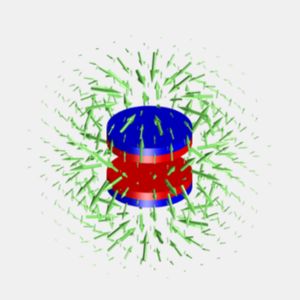
Two magnets repel each other
In the real world, here are a few things to keep an eye on during production or assembly:
- When putting together magnetic assemblies, a poorly designed magnetic circuit can let neighboring magnets mess with each other.
- If a magnet sits too close to a big chunk of steel or another ferromagnetic material, it can short-circuit the magnetic path and shift its operating point off track.
- If there's heavy electromagnetic equipment nearby—like large transformers or live welding cables—that can also throw things off.
Now, just to be clear: brief or occasional exposure to these situations usually won't zap a magnet on the spot. But if it's constantly stuck in an opposing field, the demagnetizing effect will slowly sneak up on you.
5. Rust and Corrosion
This one's probably the easiest to overlook, but for neodymium magnets, it's a pretty serious weak spot.
Neodymium magnets are mostly made from neodymium, iron, and boron. And because of all that iron, they're super prone to rust if they're not protected. Rust is basically iron oxide, and iron oxide isn't magnetic.
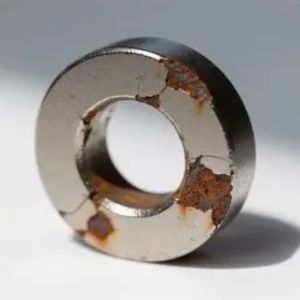
So here's what happens: if the surface gets damp or exposed to chemicals and starts to rust, that outer layer turns into non-magnetic material. And that's a bigger deal than it sounds. It means the magnet's effective volume is literally shrinking. As corrosion eats its way in, there's less and less actual magnetic material left, and you'll start seeing a steady drop in performance.
At Stanford Magnets, we specialize in neodymium, alnico, and ferrite/ceramic magnets. If you ever run into questions while picking one out or using it in the field, don't hesitate to reach out. We're always happy to talk it through with you.