

How to Choose the Right Fishing Magnets
Magnet fishing has exploded in popularity over the past few years—and for good reason. There's something uniquely satisfying about dragging a powerful magnet across the bottom of a river and pulling up a piece of hidden history. From old tools and bicycle parts to safes and antique relics, you never quite know what you're going to find.
But before you toss a magnet off a bridge and hope for treasure, there's one important step: choosing the right fishing magnet. Not all magnets are created equal, and the wrong choice can mean weak pulls, lost finds, or even lost magnets.
Let's break it down in simple, practical terms so you can pick the right magnet for your goals, environment, and experience level.
1. Start with Pull Force (And Don't Be Fooled by the Numbers)
The first spec you'll see when shopping for a fishing magnet is pull force, usually measured in pounds (lbs) or kilograms (kg). You might see magnets rated at 300 lbs, 800 lbs, 1,200 lbs, or even 3,000+ lbs.
But here's the catch: those numbers are tested under ideal lab conditions—flat steel, direct contact, no debris, and perfect alignment. Real-world magnet fishing is rarely that clean.
What Pull Strength Should You Choose?
- Beginner / Casual Use (300–600 lbs):
Great for small rivers, docks, ponds, and shallow water. You'll pull up tools, bolts, knives, and smaller scrap items. - Intermediate (800–1,200 lbs):
Ideal for bridges, deeper water, and more serious finds. Strong enough for larger objects like bike frames and heavy tools. - Advanced / Heavy Recovery (1,500+ lbs):
For experienced magnet fishers who want to retrieve safes, engines, or large metal debris.
If you're just starting out, something in the 800–1,200 lb range is usually the sweet spot—strong enough to be exciting, but manageable.
2. Single-Sided vs Double-Sided vs 360° Magnets
This is where things get interesting.
Single-Sided Magnets
These have magnetic force on one flat surface only.
Best for: Vertical drops (bridges, docks).
You lower the magnet straight down and pull straight up.
They're simple, predictable, and beginner-friendly.
Double-Sided Magnets
These have magnetic surfaces on both sides of the magnet body.
Best for: Dragging horizontally across riverbeds.
You can attach the rope to the top or side, making them more versatile than single-sided models.
360° (All-Around) Magnets
These magnets are fully exposed around the entire outer surface, meaning they attract metal from any angle.
Best for: Maximum contact in muddy or uneven terrain.
They're often more expensive but significantly more efficient. If you're serious about magnet fishing, a 360° magnet is worth considering.
3. Choose the Right Magnet Material
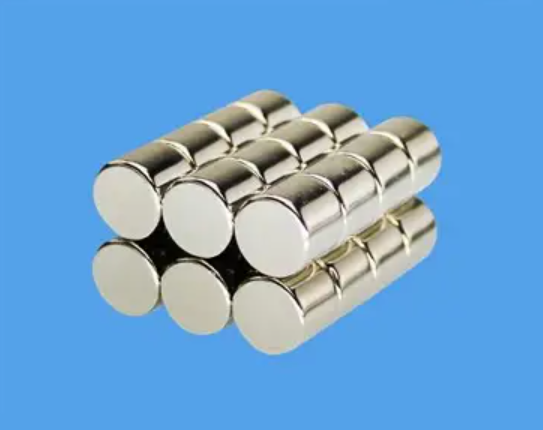
Nearly all fishing magnets are made from Neodymium, one of the strongest magnetic materials in the world. It belongs to the rare earth family and is commonly used in:
- Hard drives
- Electric motors
- Industrial lifting magnets
The most common grade you'll see is N35 to N52. Higher numbers generally mean stronger magnetic performance.
If you want maximum holding power in a compact size, look for N42 or higher.
4. Consider Coating and Corrosion Resistance
Fishing magnets live in wet, muddy, and often salty environments. Without proper coating, they'll corrode quickly.
Most quality magnets use a nickel-copper-nickel (Ni-Cu-Ni) triple coating. This helps prevent rust and chipping.
Some heavy-duty magnets also use epoxy coatings for additional protection—especially useful in saltwater.
If you plan to fish in coastal areas or brackish water, corrosion resistance becomes even more important.
5. Diameter and Weight Matter More Than You Think
Bigger magnets generally mean stronger magnets—but also heavier and harder to manage.
- A 2-inch magnet is easier to throw and retrieve.
- A 3–4 inch magnet offers serious pulling power but requires stronger rope and more effort.
If you're climbing up riverbanks or fishing from high bridges, weight becomes a real factor. You don't want something so heavy that retrieving it feels like a gym workout every time.
Balance power with practicality.
6. Don't Forget the Rope
This is one of the most overlooked pieces of the puzzle.
A strong magnet is useless if your rope snaps.
Look for:
- Minimum 1,000+ lb breaking strength
- Double-braided nylon or polyester
- 8mm–10mm thickness
- At least 65–100 feet length for bridges
Some magnet kits include rope—but often it's lower quality. Many experienced magnet fishers upgrade immediately.
7. Eyebolts and Attachment Points
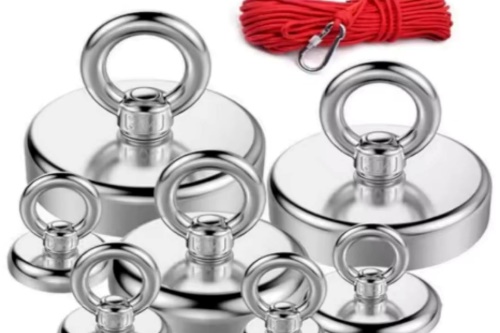
Most fishing magnets include a threaded eyebolt.
Check for:
- Stainless steel or high-grade steel bolt
- Secure threading
- Thread-lock adhesive for safety
You do not want your magnet detaching underwater. A small drop of thread locker can save you from losing a $100+ magnet.
8. Think about Your Fishing Environment
Where you plan to magnet fish should influence your choice.
Small Ponds or Creeks
Moderate strength magnet (600–1,000 lbs) is enough.
Deep Rivers
Stronger magnet (1,200+ lbs) helps compensate for current and debris.
Muddy Bottoms
360° magnets work best.
Saltwater or Coastal Areas
Choose magnets with superior corrosion coating.
Matching magnet type to environment dramatically improves results.
9. Safety First (Seriously)
Fishing magnets are extremely powerful. A high-strength neodymium magnet can:
- Pinch fingers badly
- Snap onto metal surfaces unexpectedly
- Damage electronics and phones
Keep magnets away from:
- Credit cards
- Pacemakers
- Laptops
- Car paint
Wear gloves. Always.
If you upgrade to 1,500+ lb magnets, be extra cautious—they're no joke.
10. Budget vs Performance
Entry-level magnets cost around $20–$40.
Mid-range magnets run $50–$100.
Premium 360° magnets can exceed $150.
If you're testing the hobby, start mid-range. If you're committed, invest in quality. A cheap magnet that chips or rusts quickly becomes more expensive in the long run.
Final Thoughts
Choosing the right fishing magnet isn't about buying the biggest, strongest model on the market. It's about matching strength, design, and durability to your fishing style and environment.
Start with a balanced magnet. Use strong rope. Prioritize safety. And most importantly—enjoy the process.
Magnet fishing is part treasure hunt, part environmental cleanup, and part outdoor adventure. With the right magnet in hand, you're ready to see what history is hiding beneath the surface.
Who knows? Your next throw might bring up something incredible.