


What Is the Strongest Part of a Magnet?
Magnets are among the most familiar yet fascinating objects in physics. From the fridge magnet holding up your grocery list to powerful industrial magnets used in motors and MRI machines, their magnetic fields exert invisible forces that affect everything around them. One common question that often arises is: what is the strongest part of a magnet? Understanding the answer is not only important for scientific curiosity but also for practical applications in engineering, electronics, and daily life.
Understanding Magnetic Fields
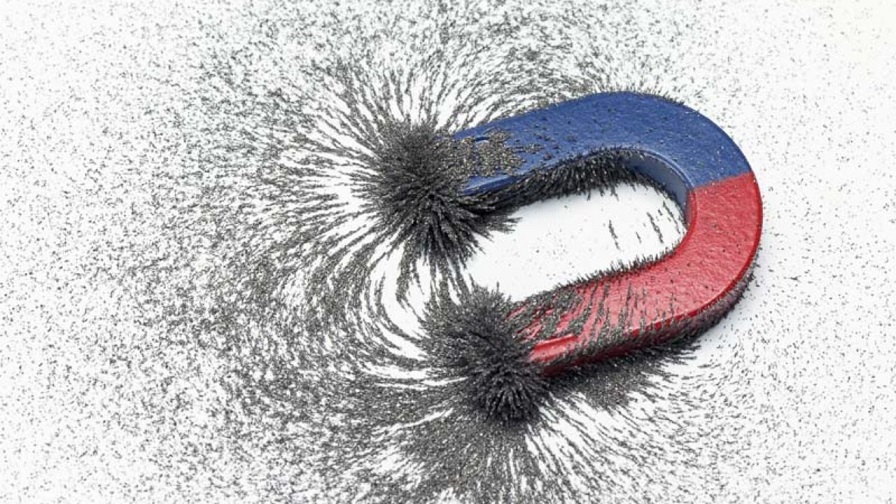
To understand the strongest part of a magnet, it's important first to understand what a magnetic field is. A magnetic field is a region around a magnet where magnetic forces can be observed. The strength and direction of this field are represented by magnetic field lines, which flow from the magnet's north pole to its south pole. Where these lines are dense, the magnetic field is strongest. Conversely, where the lines are spread apart, the magnetic influence is weaker.
Every magnet has two poles, labeled as the north and south poles. These poles are the points where the magnetic field lines emerge (north) or converge (south). The concentration of field lines at these poles is a key factor in determining where a magnet is strongest.
Related reading: How to Determine North And South Pole of Magnet?
The Strongest Part of Different Magnets
In general, the strongest part of a magnet is at its poles. Whether it is a bar magnet, a horseshoe magnet, or a disc magnet, the magnetic field reaches its maximum at the north and south poles.
- Bar Magnets: The field lines are densest at the two ends of the bar, making them the most effective points for lifting small objects like paperclips.
- Horseshoe Magnets: These magnets are bent so that the poles face each other, concentrating the field in the gap, which is why they are often used for lifting heavy metallic objects.
- Disc Magnets: The poles are located on the flat circular surfaces, not along the curved edge, and this is where the magnetic field is strongest.
In contrast, the center of a magnet, away from the poles, generally has a weaker magnetic field. This is because the field lines spread out as they move away from the poles, reducing the overall magnetic influence.
Factors Affecting Magnet Strength
The strength of a magnet's poles can be influenced by several factors:
Material of the Magnet
The type of magnetic material determines the maximum achievable field strength. Neodymium magnets are among the strongest permanent magnets, offering high field intensity and torque density. Samarium-cobalt magnets maintain their strength at higher temperatures and are resistant to demagnetization, while ferrite magnets are weaker but inexpensive and corrosion-resistant.
Shape and Size
The geometry of the magnet affects how the field lines concentrate. Longer bar magnets tend to have more concentrated poles at the ends, while disc or ring magnets focus the field across their flat surfaces. Engineers often design magnet shapes to maximize the field at the poles for specific applications.
Temperature and Environmental Conditions
Heat can significantly weaken a magnet's field, especially at the poles. Permanent magnets exposed to high temperatures risk partial demagnetization, reducing their peak strength. Similarly, external magnetic fields or mechanical shocks can also affect field concentration.
Measuring the Strongest Part
Scientists and engineers use tools like gauss meters and magnetometers to measure the field strength across different parts of a magnet. Simple demonstrations, such as lifting metallic objects or observing the behavior of iron filings around a magnet, also clearly show that the field is most intense at the poles. In experiments, the poles are consistently the points where the magnetic force is strongest.
Applications and Implications
Knowing where a magnet is strongest is not just academic—it has real-world implications:
- Industrial Use: Permanent magnets in motors, generators, and magnetic clamps rely on the concentrated fields at the poles to perform efficiently.
- Scientific Use: MRI machines and particle accelerators depend on strong, uniform magnetic fields for accurate operation.
- Consumer Products: Small magnets in appliances, speakers, and toys are designed with poles optimized to maximize attraction or field effects.
In designing magnets, engineers often focus on pole placement and shape to achieve maximum efficiency, depending on whether a wide area or concentrated field is required.
Conclusion
The strongest part of a magnet is undeniably at its north and south poles, where magnetic field lines are densest. Factors such as magnet material, shape, size, and operating conditions further influence pole strength. Understanding these principles allows scientists, engineers, and hobbyists alike to use magnets more effectively, whether in industrial machinery, medical devices, renewable energy systems, or everyday household items. By concentrating on the poles, one can harness the full power of a magnet in practical applications. For more magnet basics, please check Stanford Magnets.