

How to Select the Right NdFeB Magnet for Sensor Applications (Grade, Temp & Shape Guide)
If you're designing or procuring components for industrial sensors, you've probably realized that the magnet spec on the datasheet doesn't tell the whole story.
We see this all the time: an engineer picks a standard N35 disc magnet because it's cheap and available. Six months later, the sensor is failing in the field because the magnet lost 15% of its strength at 85°C, and the customer wants to know why.
Here's how to avoid that mistake.
Why Sensors Are Picky About Magnets
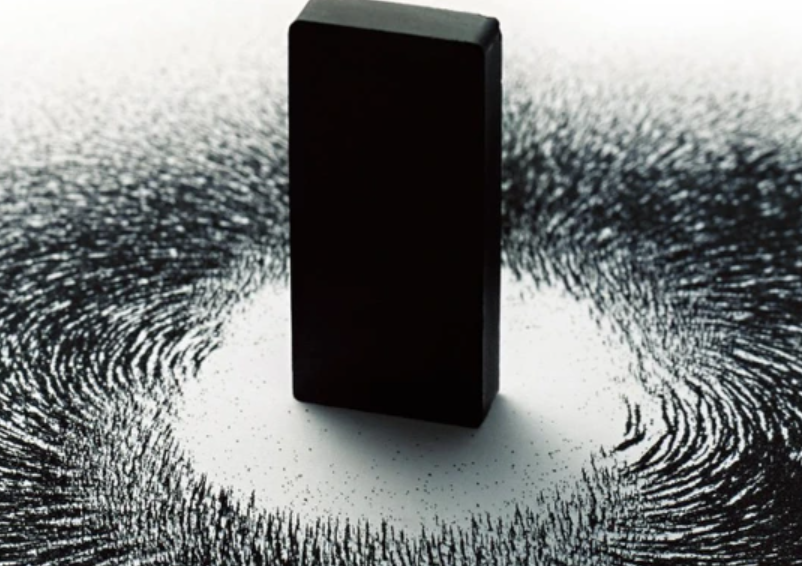
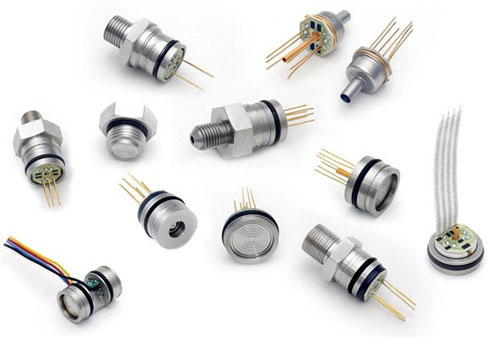
Industrial sensors come in all flavors — Hall effect, reed switches, encoders, proximity sensors. But they share one thing in common: they rely on a consistent, predictable magnetic field to switch or measure accurately.
The magnet isn't just a piece of metal that sticks to something. It's the active component that makes the sensor work. If its performance drifts with temperature, or if it demagnetizes over time, the sensor drifts too. And that means false triggers, missed counts, or worse — equipment downtime.
The good news is that NdFeB magnets are incredibly capable for sensor applications. The bad news is that you can't just pick the strongest one and call it a day.
NdFeB Magnet Selection: Physical Size & Shape
Before you even look at grades, you need to know what physically fits.
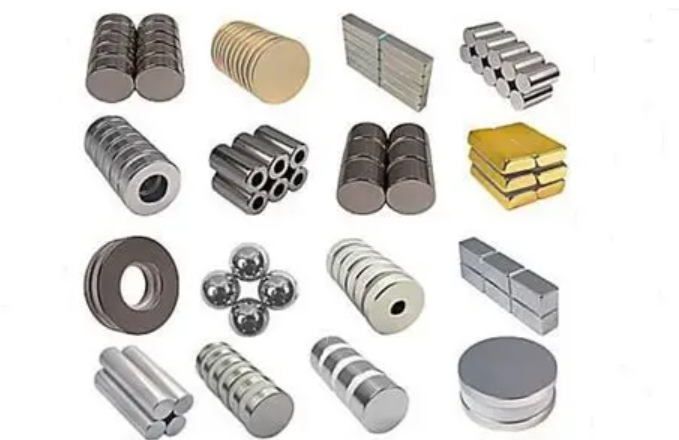
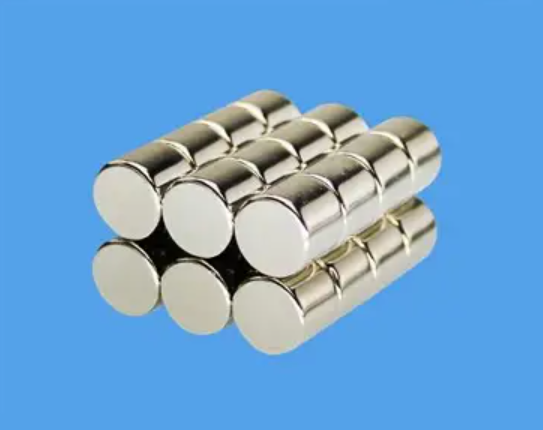
Disc magnets are the most common choice for sensors. They're thin, easy to mount, and can be pressed into pre-drilled holes or bonded with adhesive. For most general-purpose sensors, a disc between 5mm and 20mm in diameter handles the job.
Cylinder or rod magnets work when you need a longer magnetic axis. The field projects further from the end face, which can be useful in position sensing applications where the magnet moves relative to the sensor.
Block magnets are less common in sensors but show up when you need a specific pole orientation or a larger surface area for mounting.
The rule of thumb: keep the magnet as close to the sensor as your mechanical design allows. Every millimeter of air gap reduces effective field strength, and that forces you to overspec the magnet, which costs more and takes up more space.
Choosing the Right NdFeB Grade: N-Rating vs. Temperature Suffix
This is where most people get tripped up. Reading more about Neodymium Magnet Grades.
Decoding the Number: N35, N42, vs. N52
The number (35, 42, 48, 52, etc.) represents the maximum energy product — roughly speaking, how strong the magnet is at room temperature.
An N52 magnet is about 30% stronger than an N35 of the same size. That sounds like a no-brainer, right? Why not always pick N52?
Because strength isn't the only thing that matters — and for many sensors, it's not even the most important thing.
N52 is expensive. It uses higher-purity raw materials and tighter manufacturing tolerances, so it costs significantly more. If your application doesn't need that extra 30%, you're burning budget for no reason.
N52 is brittle. The stronger the grade, the more internal stress the magnet carries. It chips and cracks more easily during assembly. That matters if you're handling thousands of parts.
N52 has the same temperature limits as N35. Both are standard-grade magnets rated to about 80°C. At higher temperatures, they both start losing strength — sometimes permanently.
Decoding the Suffix: Standard vs. M, H, SH, UH, EH
This is the part that catches people off guard.
|
Suffix |
Max Operating Temp |
When to Use It |
|
None (e.g., N42) |
80°C |
Office environment, indoor electronics, controlled temperature |
|
M |
100°C |
Higher-end speakers, some automotive interior sensors |
|
H |
120°C |
Industrial sensors on factory floors |
|
SH |
150°C |
EV motors, under-hood sensors, outdoor equipment in hot climates |
|
UH |
180°C |
Automotive transmission sensors, high-speed rotors |
|
EH / AH |
200°C+ |
Aerospace, downhole drilling, extreme environments |
The letter indicates the intrinsic coercivity — the magnet's resistance to demagnetizing itself when it gets hot.
Here's a real example we see often:
A design engineer specs an N52 disc magnet for a proximity sensor mounted near a motor. At room temperature, it works perfectly. But the motor housing hits 110°C during operation. The N52, rated for 80°C, starts losing magnetism. Not all at once, but gradually. After a few hundred thermal cycles, the sensor misses targets. The magnet didn't "fail" catastrophically. It just degraded enough to stop working reliably.
An N42SH would have been the better choice. It's weaker at room temperature, but it holds its performance up to 150°C. In a hot environment, the N42SH actually delivers more usable field strength than the N52 does.
Selecting the Right Surface Coating
Sensors aren't always in dry, clean environments. If your application sees moisture, humidity, or washdown, you need to think about corrosion.
NdFeB magnets are mostly iron. They rust.
Standard coating: Nickel-copper-nickel (Ni-Cu-Ni) is the industry default. It's about 10-20 microns thick and handles typical indoor use well.
Epoxy or zinc coating: Better for higher humidity or outdoor exposure. Adds a bit of thickness, which can matter for tight tolerances.
Rubber or plastic coating: Not common in sensors, but worth mentioning for applications where you want extra grip or scratch protection.
If you're putting the magnet in a sealed sensor housing, the coating matters less. If the magnet is exposed in a magnetic encoder that sits in an open environment, don't skip this step.
Engineering Trade-offs: Real-World Scenarios
Scenario 1: Room-Temperature Sensor, Tight Budget
You're designing a Hall effect sensor for a consumer appliance. Operating temperature: 25-50°C. Space is moderate. Cost matters.
Pick: N35 or N42 disc magnet, no temperature suffix.
Why: You don't need the extra strength of N52, and you definitely don't need the thermal headroom of an SH grade. Save the money.
Scenario 2: Under-Hood Automotive Sensor
The sensor sits near the engine. Ambient temp hits 120°C on a hot day. Vibration is present. The magnet needs to hold its properties for 10+ years.
Pick: N42SH or N45SH. Consider a cylinder shape for press-fit mounting to handle vibration.
Why: You need the thermal stability. An N52 would be dead within months. The SH grade costs more, but it's the only grade that actually works in this environment.
Quick Selection Reference Table
|
Operating Temp |
Recommended Grade |
Coating |
Notes |
|
< 80°C, indoor |
N35, N42 |
Ni-Cu-Ni |
Cost-effective, readily available |
|
< 80°C, tight space |
N48, N52 |
Ni-Cu-Ni |
Strongest for size, but premium cost |
|
80-120°C |
N42H, N45H |
Ni-Cu-Ni or Epoxy |
Standard industrial grade |
|
120-150°C |
N40SH, N42SH |
Epoxy recommended |
EV and under-hood applications |
|
> 150°C |
UH or EH grades |
Consult engineering |
Special order, longer lead times |
Conclusion
Choosing a magnet for a sensor application isn't complicated, but it's not as simple as picking the strongest one either.
Ask yourself three questions before you spec:
- What's the actual operating temperature range? Not the "ideal" temperature — the worst-case temperature.
- How much physical space do I have? If you're tight on space, you might need a higher grade (N48/N52) to get enough field in a small package.
- Is the magnet exposed to moisture or vibration? That drives coating and mounting method.
If you get these three right, the rest is straightforward.
FAQs about NdFeB Sensor Magnets
Q1: What happens if an NdFeB magnet exceeds its max operating temperature?
It permanently loses strength. Cooling won't restore it.
Q2: Is N52 always better than N35 for sensor applications?
No. N52 is stronger at room temp, but in hot environments (>80°C), a lower-grade heat-resistant magnet (e.g., N42SH) performs better. Choose based on temperature, not just grade number.
Q3: Which coating is best for exposed outdoor sensor magnets?
Epoxy or zinc. Standard nickel coating corrodes outdoors. Epoxy handles moisture and salt spray much better.
Need a hand matching a grade to your specific sensor design? Send Stanford Magnets your operating conditions, dimensions, and field strength requirement. We'll recommend a grade and coating that fits.