

5 Major Medical Applications of Neodymium Magnets
Neodymium magnets—the third generation of rare-earth permanent magnets—offer ultra-high energy product, strong magnetic force, and compact size. These properties make them a key enabler for many innovative medical technologies. From precision diagnostics to minimally invasive treatments, their applications are expanding and helping improve healthcare efficiency and patient experience.
1. Magnetic Resonance Imaging (MRI)
MRI is a vital tool in modern medical diagnosis. Its core requirement is a stable, strong magnetic field. Traditional superconducting MRI relies on liquid helium-cooled superconducting coils—expensive and complex to maintain. Neodymium permanent magnets have made open, low-field MRI more accessible. These systems use neodymium magnet arrays and require no liquid helium. Operating costs are about one-third of superconducting MRI. The open design is also better for pediatric patients, patients with claustrophobia, and intraoperative imaging.
In terms of working principle, neodymium magnets provide a static magnetic field (0.3T–1.5T) that aligns hydrogen nuclei in body tissues. Radiofrequency pulses then excite resonance, and the resulting signals are processed into clear tissue images. Low-field MRI systems in community hospitals can handle routine exams of the brain, joints, and other areas—bringing diagnostic services to underserved regions.
2. Magnetically Navigated Interventional Procedures
In cardiovascular interventions, neodymium magnets are key components of magnetic navigation systems. An external array of neodymium magnets creates a controllable magnetic field that guides magnetic catheters or guidewires to precise targets—like a coronary artery stenosis or an atrial fibrillation focus—for stent placement, ablation, or other procedures.
Compared to traditional X-ray guidance, magnetic navigation offers three key benefits: higher precision (catheter positioning accuracy within 0.5 mm), less invasiveness (reduced vessel damage), and lower radiation exposure (no prolonged X-ray exposure for doctors or patients). In atrial fibrillation ablation, for instance, magnetic navigation can cut procedure time by more than 30% and reduce complication rates.
3. Targeted Magnetic Drug Delivery
The high magnetic field of the neodymium magnets brings new prospects for the targeted delivery of drugs. Cancer medications or gene vectors are mixed with magnetic nanoparticles, which are then introduced into the patient’s body. With the help of an external neodymium magnet, they become concentrated around the tumor or inflammation area, thus increasing the drug concentration there and lowering the side effects.
When treating patients suffering from liver cancer, the introduction of magnetic nanoparticles via intravenous injection increases their concentration in the liver region up to 5–10 times in the presence of the neodymium magnetic field. This greatly increases the effectiveness of chemotherapies and lowers side effects such as hair loss and nausea. It can be used to treat arthritis as well.
4. Magnetic Therapy and Rehabilitation
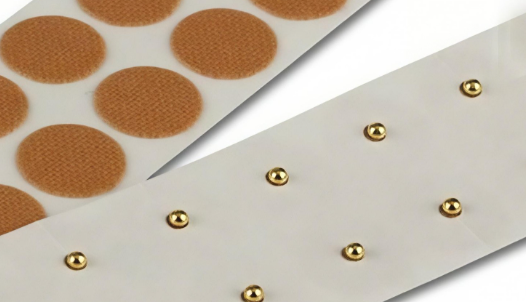
Low-level neodymium magnetic fields (50-500 mT) have the ability to penetrate through the skin tissues and improve blood flow while alleviating muscle spasm. Examples of such devices are magnetic therapeutic patches, magnetic mattresses, and magnetic lumbar belts. They are typically applied as an auxiliary therapy for cervical spondylosis, arthritis, and chronic pain.
Neodymium magnetic fields that emanate from magnetic patches work by stimulating the nerves in the affected region, regulating the tension in the muscles, and alleviating the pain. Unlike physiotherapy, magnetic therapy is non-invasive and very portable.
What is magnetic therapy? → Magnetic Therapy for Pain Relief: A Review of Research and Case Studies
5. Key Components in Medical Devices
Neodymium magnets are also widely employed as an essential part of several devices used in medicine:
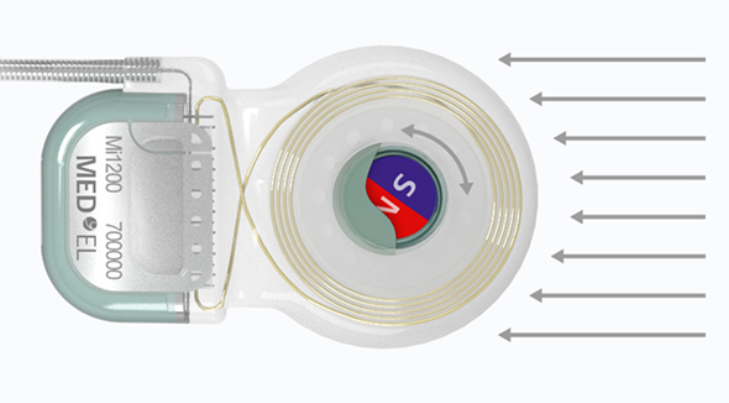
- Cochlear implants: Neodymium magnets offer magnetic coupling between the outside coil and the inside implant, which allows for reliable transfer of sound signals without the use of wires implanted into the body.
- Minimally invasive surgical tools: Magnetic graspers that operate using the powerful magnetic field of neodymium ensure accurate grasping of tissue during laparoscopy.
- Infusion pumps: Neodymium magnets are used to drive valves to control drug dosages.
Summary
With the special magnetic properties of neodymium magnets, there is now a wide range of applications in medicine for diagnostics, treatments, and both big machines and small tools. They form the basis of further innovation in the area of medical application. With improvements in the properties of the material itself, as well as with increased integration with artificial intelligence and nanotechnology, there is potential for more innovative applications of neodymium magnets in medicine. Stanford Magnets, as a long-standing supplier in the magnet industry, remains committed to providing high-quality neodymium magnet products for medical applications.