

What Effect Does Coating Have on a Magnet's Magnetic Force?
The direct effect of coating on a magnet's magnetic force is very limited. But its indirect effects and long-term protective role are critical to magnet performance. Different coating materials come with different mechanisms and suit different applications.
Direct Effect on Magnetic Force
In theory, the direct magnetic loss caused by most commercial coatings—like nickel, gold, epoxy, and rubber, is negligible. It's usually just 1–2%. That's because coatings are very thin, typically 10–20 microns. Neodymium magnets are already extremely powerful, so this tiny thickness has almost no impact on the magnetic circuit. Coatings are mostly there for corrosion protection, friction control, and other functional needs. In fact, some studies even show that a properly applied nickel coating of the right thickness doesn't hurt magnetic performance at all.
That said, coatings aren't entirely without effect. Thicker coatings or ones with special magnetic properties can create an indirect "shielding" effect.
For highly conductive coatings like gold, silver, or copper, a weak eddy current effect can occur in changing magnetic fields. This consumes a small portion of magnetic energy. Epoxy coatings, by contrast, are excellent electrical insulators and avoid this issue entirely.
Nickel itself is a magnetic metal. Research shows that if a nickel coating is too thick, its own ferromagnetism can "divert" some magnetic flux lines, reducing output. That's one reason coating thickness needs tight control.
Magnet Coating Comparison
In general, coatings have only a tiny effect on magnetic force. The real decision factors are corrosion resistance, wear resistance, and the operating environment.
Nickel Plating (Ni-Cu-Ni)
Moderate corrosion resistance—fine for dry indoor use, but salt spray and humidity can cause issues through tiny pores. Wear resistance is good. Cheap, common, and looks nice, but fails fast if the coating gets scratched.
Best for: Dry indoor settings—consumer electronics, motors, sensors, toys, office supplies. Pros: low cost, bright finish, mature process. It's the most widely used coating in industry today.
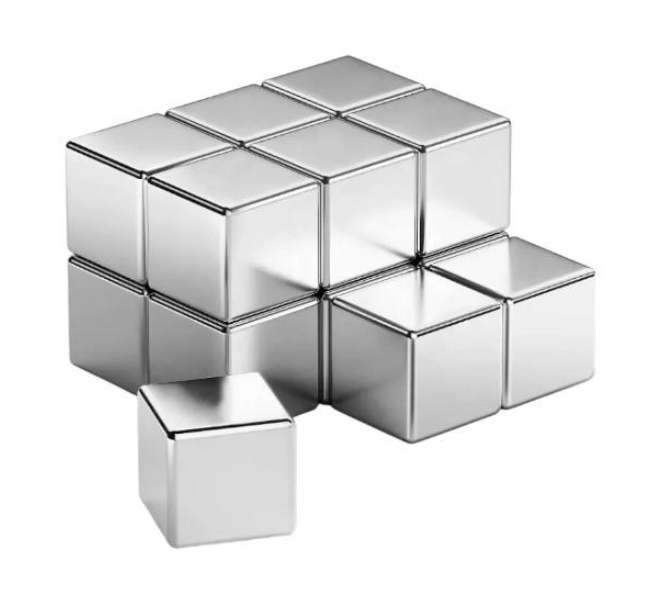
Nickel Coated Neodymium Block Magnet
Gold Plating
Great against certain chemicals, but soft and scratches easily. Best for high-end or high-conductivity uses like medical sensors or audio jacks. Expensive and not for anything that rubs or touches.
Best for: High-conductivity needs, biocompatibility, or premium decorative uses—medical sensors, electrodes, audio jacks, luxury packaging, display pieces. Pros: low contact resistance, minimal signal loss, premium look.
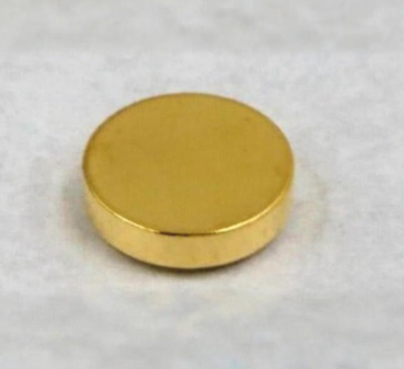
Neodymium Rare Earth Gold Plated Disc Magnet N52
Epoxy
Excellent corrosion protection—seals out moisture, salt, and chemicals. Tough and durable, but thicker than metal platings and only good up to about 150°C. Ideal for outdoor, marine, or chemical environments.
Best for: Humid environments, marine settings, outdoor installations, chemical equipment—submersible pumps, offshore wind turbines, marine components, outdoor lighting. Pros: high chemical inertness, good insulation, strong environmental protection.
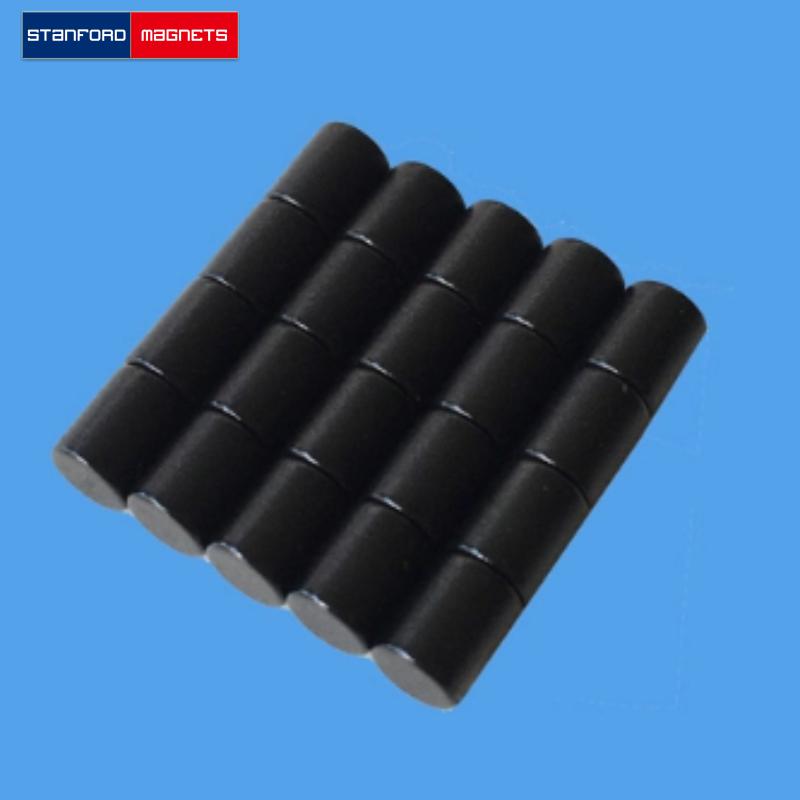
Neodymium Rare Earth Epoxy Coated Disc Magnet N42
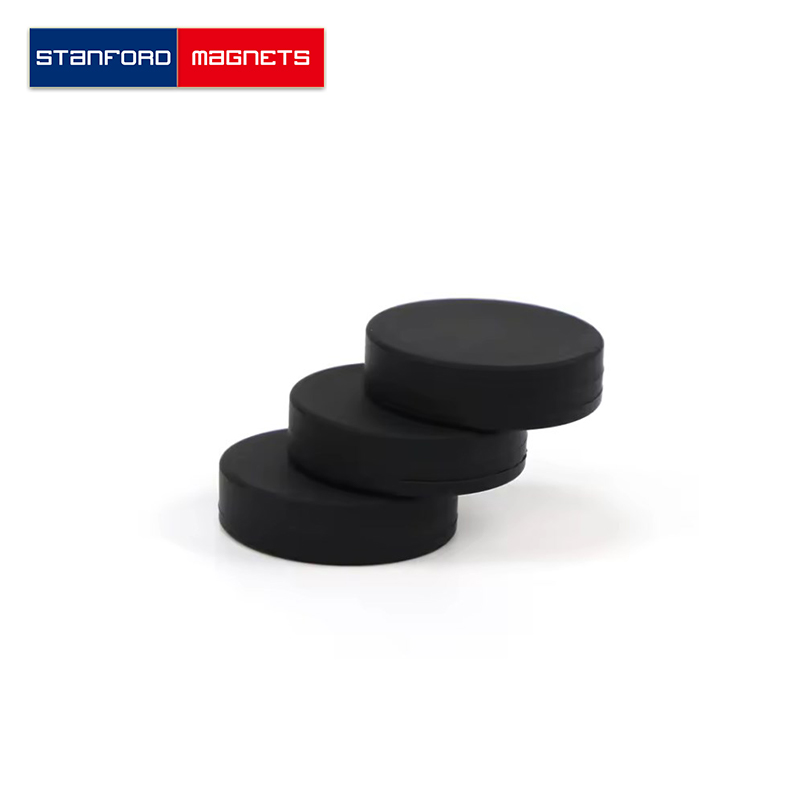
Rubber
Good corrosion resistance plus great cushioning and impact protection. Excellent wear resistance. Works well for high-vibration or non-slip uses. Downsides: thick, limited temperature range, and ages over time.
Best for: High-vibration, high-impact environments, or non-slip/quiet applications—auto parts, clamping devices, anti-vibration washers, hand tools. Pros: protects magnet from cracking, improves grip and feel.
Plastic (Teflon/Nylon, etc.)
Top-tier corrosion resistance and outstanding wear resistance—Teflon is self-lubricating and ultra-slick. Great for chemical or high-friction settings. But the coating process is complex, it's pricey, and temperature tolerance is limited.
Best for: High-corrosion, high-friction, or low-friction needs—chemical pump valves, food-contact equipment, slide rail assemblies. Pros: anti-stick, self-lubricating, excellent chemical resistance.
.jpg "Teflon (PTFE) Coated Magnets")
Selection Summary
|
Coating Type |
Nickel |
Gold |
Epoxy |
Rubber |
Plastic |
|
Corrosion Resistance |
Moderate |
Excellent vs. specific media |
Excellent |
Good |
Excellent |
|
Wear Resistance |
Good |
Poor |
Good |
Excellent |
Outstanding |
|
Best Environment |
Dry indoor |
High-conductivity / Biocompatible / Premium decor |
Wet / Salt spray / Outdoor |
High-vibration / Impact / Non-slip |
High-corrosion / High-friction |
|
Typical Use |
Motors, sensors, toys |
Medical electrodes, audio jacks, jewelry |
Submersible pumps, wind power, outdoor lights |
Auto parts, anti-vibration pads, clamps |
Chemical pumps, food equipment, guide rails |
If you need gold- or nickel-plated magnets for medical implants or other demanding applications, Stanford Magnets offers neodymium magnets in various grades and sizes. Custom dimensions and coating thicknesses are available upon request.