

Magnet Solutions for Halbach Array Motors
When designing high-performance permanent magnet motors, have you ever faced these challenges? How can you increase air gap flux density without using more magnet material? How do you compensate for weak magnetic fields in ironless designs? How do you secure magnets against centrifugal forces at high speeds? Halbach arrays offer a proven technical path forward.
What Is a Halbach Array?
A Halbach array is a special arrangement of permanent magnets. By rotating the magnetization direction of adjacent magnets by 90° in sequence, it creates a one-sided magnetic field—strong on one side, nearly zero on the other. John Mallinson first discovered this effect in 1973. Physicist Klaus Halbach later applied it to particle accelerators in the 1980s, giving the array its name.
Compared to conventional magnetic circuit designs, the Halbach array delivers two key benefits: stronger effective magnetic field with the same magnet material volume, or significantly less magnet material for the same field strength.
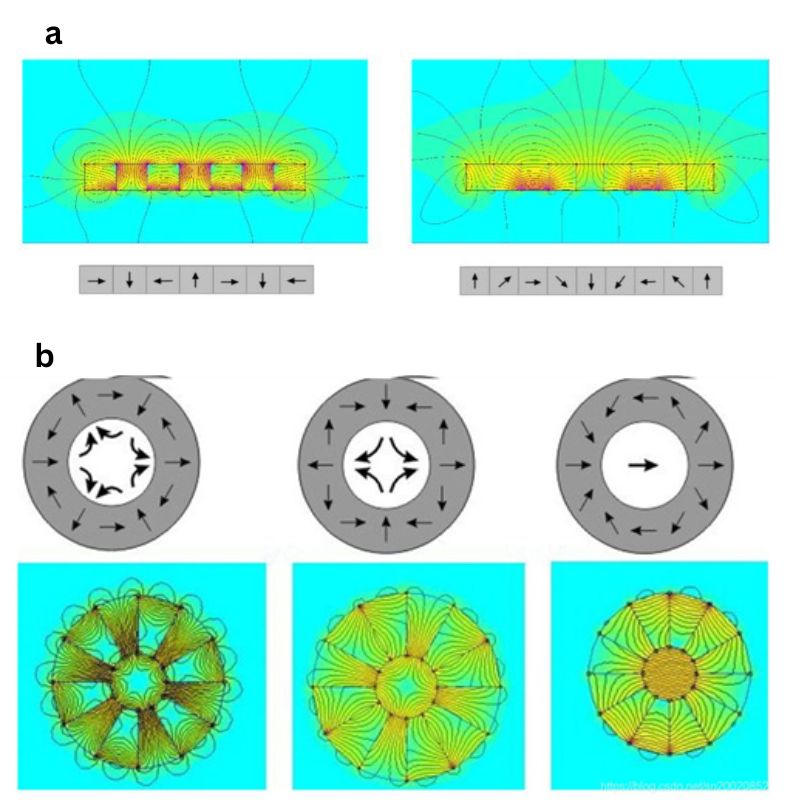
Fig 1. Form of the Halbach array. a: Linear queue; b: Circular queue
What Can a Halbach Array Do for Motor Design?
1. Significant Boost in Power/Torque Density
In axial-flux permanent magnet motors, Halbach rotor arrays can increase torque density by up to 30% compared to traditional surface-mounted permanent magnet topologies.[1] This improvement comes directly from the one-sided field enhancement effect, with no increase in magnet material usage.
For space-constrained applications like in-wheel motors, Halbach arrays allow designers to achieve more flexible flux patterns, further enhancing torque density. This advantage is especially critical for electric vehicle wheel drives, robotic joints, and other compact, high-power-density applications.
2. Enabling True "Ironless" Designs
The one-sided field characteristic of Halbach arrays eliminates the need for a back iron to close the magnetic circuit—and this is one of its most revolutionary benefits.
Ironless motors deliver multiple advantages:
- Complete elimination of iron losses: Eddy current and hysteresis losses drop to zero, significantly improving efficiency
- Zero cogging torque: Extremely smooth operation with nanometer-level positioning accuracy
- Lower weight and reduced rotational inertia: Faster dynamic response
- Much higher speed limits: No iron core saturation constraints—maximum speeds exceeding 10,000 rpm are achievable
A 50 kW, 9,000 rpm ironless stator axial-flux permanent magnet motor prototype using a Halbach rotor array achieved a measured output of 53.8 kW.[2]
3. Precise Thrust Control and Ripple Suppression
In linear and planar motors, Halbach arrays also demonstrate unique value.
Research shows that linear synchronous motors using a novel electromagnetic Halbach array can achieve thrust error within 2.53%, with near-zero normal force—meeting the demands of high-precision operations. In magnetic levitation planar motors, optimized Halbach arrays reduce thrust ripple and improve air gap field uniformity, resulting in a 9.1% increase in thrust density.[3]
4. Meeting Extreme Operating Conditions
In demanding applications like electromagnetic launch systems—which require high-speed, high-thrust transient performance—ironless double-sided Halbach permanent magnet linear synchronous motors have been validated for non-periodic transient launch requirements.
Halbach Array Needs by Motor Type
|
Motor Type |
Primary Halbach Function |
Key Performance Gains |
|
Axial-Flux PM Motors |
Boost air gap flux, enable ironless design |
Torque density ↑30%, efficiency ↑, weight ↓ |
|
In-Wheel/Outer-Rotor Motors |
Overcome volume limits to boost torque |
Significantly higher torque density in same volume |
|
Linear/Planar Motors |
Increase thrust density, suppress ripple |
Thrust error <3%, nanometer positioning accuracy |
|
High-Speed Motors (>10,000 rpm) |
Reduce losses, raise speed limits |
Efficiency ↑, speed ↑, zero iron loss |
How to Choose Halbach Array Magnet Materials
Neodymium (NdFeB) or Samarium cobalt (SmCo)
Halbach arrays demand high consistency and performance from magnet materials. Neodymium (NdFeB) is the mainstream choice for Halbach motors due to its extremely high energy product. Samarium cobalt (SmCo) is better suited for high-temperature or high-reliability applications such as aerospace.
Manufacturing Process Differences
The manufacturing process directly affects motor performance and cost:
- Discrete magnet bonding: Individual rectangular or arc magnets are bonded one by one. This method is labor-intensive and limited in precision, but offers high flexibility.
- Multi-pole integral rings: Radially multi-pole magnet rings made with special sintering technology offer higher field uniformity, easier assembly, and no bonding defects—making them the preferred choice for motor rotors.

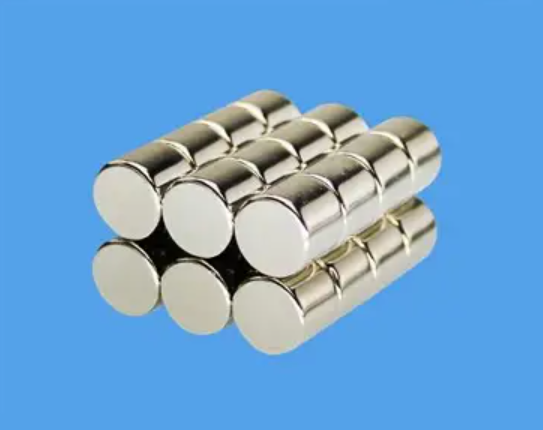
Fig 2. Neodymium Arc Magnets
Why Choose Stanford Magnets?
As a professional supplier of magnetic materials and magnetic assemblies, Stanford Magnets offers:
- Custom Halbach arrays: From linear to ring arrays (inner-diameter/outer-diameter types), tailored to specific motor design requirements
- Multi-pole integral rings: Advanced sintering technology for high field uniformity, easy assembly, and excellent mechanical properties
- Arc magnets: For segmented assembly of ring-type Halbach rotors
- Magnetic assembly integration: Full solutions from individual magnets to complete magnetic circuit assemblies
Whether you are developing next-generation EV in-wheel motors, high-precision lithography stages, or high-speed spindle motors, Stanford Magnets can provide customized Halbach array magnet solutions based on your specific performance targets. For technical consultation or product inquiries, please contact our sales engineering team.
[1] Yaser Chulaee, Donovin Lewis, Matin Vatani, John F. Eastham, Dan M. Ionel, Torque and Power Capabilities of Coreless Axial Flux Machines with Surface PMs and Halbach Array Rotors, Department of Electronic & Electrical Engineering, 10.1109/IEMDC55163.2023.10239021
[2] Z. Zhang, C. Wang and W. Geng, "Design and Optimization of Halbach-Array PM Rotor for High-Speed Axial-Flux Permanent Magnet Machine With Ironless Stator," in IEEE Transactions on Industrial Electronics, vol. 67, no. 9, pp. 7269-7279, Sept. 2020, doi: 10.1109/TIE.2019.2944033.
[3] Wang, R.; Zhang, L.; Shi, C.; Zhao, C.; Yang, K. Analysis and Optimization of a Moving Magnet Permanent Magnet Synchronous Planar Motor with Split Halbach Arrays. Energies 2025, 18, 1388. https://doi.org/10.3390/en18061388