

Types of Torque Couplings and Their Uses in Modern Machinery
Torque couplings sit quietly between shafts, motors, and gearboxes, but they play an outsized role in how modern machinery performs, survives, and delivers precision. Whether in a high-speed CNC spindle, a conveyor system in a factory, or a robotic joint on an automated production line, the right torque coupling ensures power is transmitted smoothly while protecting components from misalignment, vibration, and overload. As machinery becomes faster, more compact, and more automated, the diversity and sophistication of torque couplings have expanded to meet these demands.
What Is a Torque Coupling?
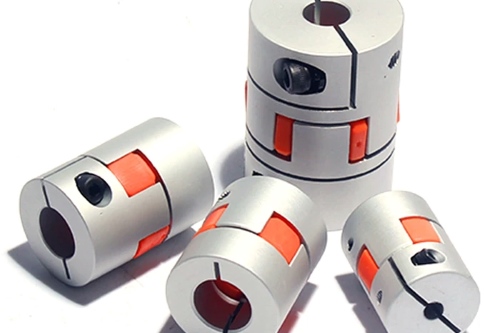
A torque coupling is a mechanical device used to connect two rotating shafts in order to transmit torque from a driving element (such as a motor) to a driven component (such as a gearbox or pump). Beyond simply transferring rotational power, modern couplings are engineered to accommodate shaft misalignment, dampen shock loads, reduce vibration, and, in some cases, protect systems from overload damage. Different coupling types achieve these functions through distinct mechanical designs and material choices.
Understanding the main types of torque couplings and where they are best applied is essential for selecting reliable, efficient machinery components.
Rigid Couplings: Precision with Zero Flexibility
The rigid coupling is the simplest type of coupling for transmitting torque. It is one where there is direct coupling between two shafts, with no movement possible between them. This makes it highly efficient in transferring torque with high accuracy and with little loss.
This type of coupling is often used in scenarios where shafts are perfectly aligned with one another, such as in test equipment or in machine tools where there is little or no change in geometry. However, due to their lack of ability to compensate for misalignment, any misalignment or error in shafts can result in excessive stress on bearings and possible early failure. Rigid couplings are therefore best used in controlled conditions where shafts are perfectly aligned.
Flexible Couplings: Balancing Power and Protection
Flexible couplings are designed to transmit torque while accommodating shaft misalignment. They are widely used in modern machinery because perfect alignment is rarely achievable in real-world installations. These couplings reduce mechanical stress and extend the service life of bearings, seals, and shafts.
Among flexible couplings, several subtypes dominate industrial applications:
Jaw Couplings feature two metal hubs with an elastomeric "spider" connecting them. Their ability to absorb torsional loads and damp vibrations makes jaw couplings suitable for use in pumps, compressors, and general-purpose motors. Jaw couplings are inexpensive and simple to mount, but they are not suitable for high-speed or high-temperature applications.
Elastomeric Sleeve Couplings feature flexible rubber or plastic sleeves that connect the shafts. Their high shock-absorbing capacity makes elastomeric sleeve couplings suitable for use in conveyor applications, fans, and agricultural equipment. The disadvantage of elastomeric sleeve couplings is their relatively low torque rating compared to metal couplings.
Disc Couplings feature a laminated stack of thin metal discs. Their high torque and high-speed capabilities, as well as their ability to accommodate angular and axial misalignment, make disc couplings suitable for use in CNC machines, high-speed compressors, and high-precision automation machinery, where backlash-free torque transmission is required.
Gear Couplings: High Torque for Heavy Industry
Gear couplings are used for applications that require a high torque transmission within a relatively small space. Gear couplings consist of two hubs, one of which has external teeth and the other internal teeth. These two hubs fit inside a sleeve, and this arrangement can tolerate a certain degree of misalignment while providing a high torque transmission ability.
Gear couplings are used in steel plants, mining industry, and heavy-duty conveyors. These couplings can be used in harsh environments and can tolerate shock loads. However, proper lubrication and maintenance of these couplings are essential. In modern machinery, gear couplings are used when the torque requirements exceed those of other couplings.
Oldham Couplings: Solving Parallel Misalignment
Oldham couplings are particularly designed for use when there is parallel or radial misalignment between the two axes. Oldham couplings are made of three pieces, two hubs, and a floating center disc that slides between the two hubs. This enables the Oldham coupling to transmit constant velocity.
Oldham couplings are commonly used in printing machines, packaging machines, and motion control devices, particularly when there is parallel misalignment. Although Oldham couplings offer smooth torque transmission, they are generally limited to moderate torque and involve maintenance of the center discs.
Magnetic Couplings: Torque Without Contact
Magnetic couplings, which transfer torque through the medium of magnetic fields, ensure the highest level of isolation between the driving and driven shafts. This makes magnetic couplings suitable for high-containment, leakage, and hermetic sealing requirements.
In the chemical, pharmaceutical, and food industries, magnetic couplings are often used in pumps for the prevention of fluid leakage. Since magnetic couplings do not have a mechanical connection, they have a low level of maintenance. However, magnetic couplings are generally not as strong as mechanical couplings and can also slip during overloading.
Fluid Couplings: Smooth Starts and Shock Absorption
Fluid couplings use hydraulic fluid to transmit torque between an input and output impeller. This design allows for smooth acceleration, shock load damping, and controlled torque transfer. They are especially useful in applications involving large inertial loads.
These couplings are widely used in conveyor drives, crushers, and heavy fans. In modern machinery, fluid couplings help reduce startup stress on motors and mechanical components. Their main trade-off is lower efficiency compared to direct mechanical couplings due to energy losses in the fluid.
Choosing the Right Torque Coupling
Selecting the appropriate torque coupling requires balancing torque capacity, misalignment tolerance, speed, environmental conditions, and maintenance requirements. In high-precision machinery, backlash-free disc or Oldham couplings are often preferred. For heavy industrial applications, gear or fluid couplings dominate. In clean or sealed environments, magnetic couplings provide unique advantages.
As modern machinery continues to evolve toward higher efficiency, automation, and reliability, torque couplings are no longer simple connectors. They are engineered components that directly influence system performance, uptime, and operational safety.
Conclusion
Types of torque couplings vary widely, each serving a distinct role in modern machinery. From rigid couplings that deliver uncompromising precision to flexible designs that absorb shock and misalignment, and from magnetic couplings that enable leak-free operation to torque limiters that protect valuable equipment, these components are foundational to reliable mechanical systems. Understanding their differences and applications allows engineers and manufacturers to design machines that are not only powerful, but also durable, efficient, and future-ready. For more information, please check Stanford Magnets.