

Common Magnet Shapes and How They Serve Different Magnetic Field and Requirements
Magnets are often discussed in terms of material—neodymium, samarium cobalt, ferrite, or alnico—but shape is just as critical to performance as composition. The geometry of a magnet determines how magnetic flux is distributed, how strong the working field becomes at a given point, and how easily the magnet can be integrated into mechanical assemblies. In modern engineering and product design, more than ten widely used magnet shapes are employed, each optimized for specific structural constraints and magnetic field requirements.
1. Disc Magnets: Balanced Fields and General-Purpose Use
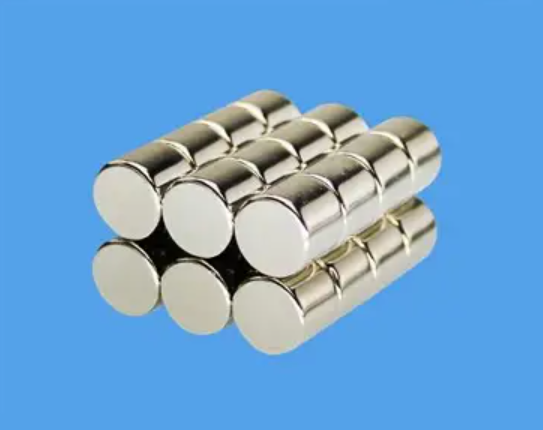
Disc magnets are among the most widely used magnet shapes due to their simple geometry and balanced magnetic field distribution.
A disc magnet is a short cylinder of magnetic material with a field running through the thickness of the magnet. This means that the field is symmetrical on both faces of the magnet. Disc magnets are often used for applications where a balance between holding force and ease of handling is important. They are often used in sensor applications, magnetic couplings, motors, loudspeakers, and laboratory equipment.
The symmetrical nature of the field makes a disc magnet a popular choice for applications where a consistent level of attraction is needed. Disc magnets are also useful for applications where a stack of magnets is needed. The field strength can be increased by stacking the magnets without increasing the diameter of the magnets.
2. Ring Magnets: Symmetry and Central Clearance
Ring magnets are designed to provide a balanced magnetic field while allowing space for shafts, fasteners, or wiring.
A ring magnet is a ring of magnetic material with a hole through the middle. The ring is magnetized along the axis of the ring, which means that the north and south poles of the ring are symmetrical on each face of the ring. The ring also has a hole through the middle. The ring is often used in brushless motors, encoders, magnetic bearings, loudspeakers, and rotary sensors.
The hole through the middle of the ring not only makes the ring lighter but also makes it more versatile. The ring is often used in applications where the ring is rotating. The ring is also useful for applications where the alignment of the ring is important.
3. Block and Rectangular Magnets: Structural Simplicity and Strong Holding Force
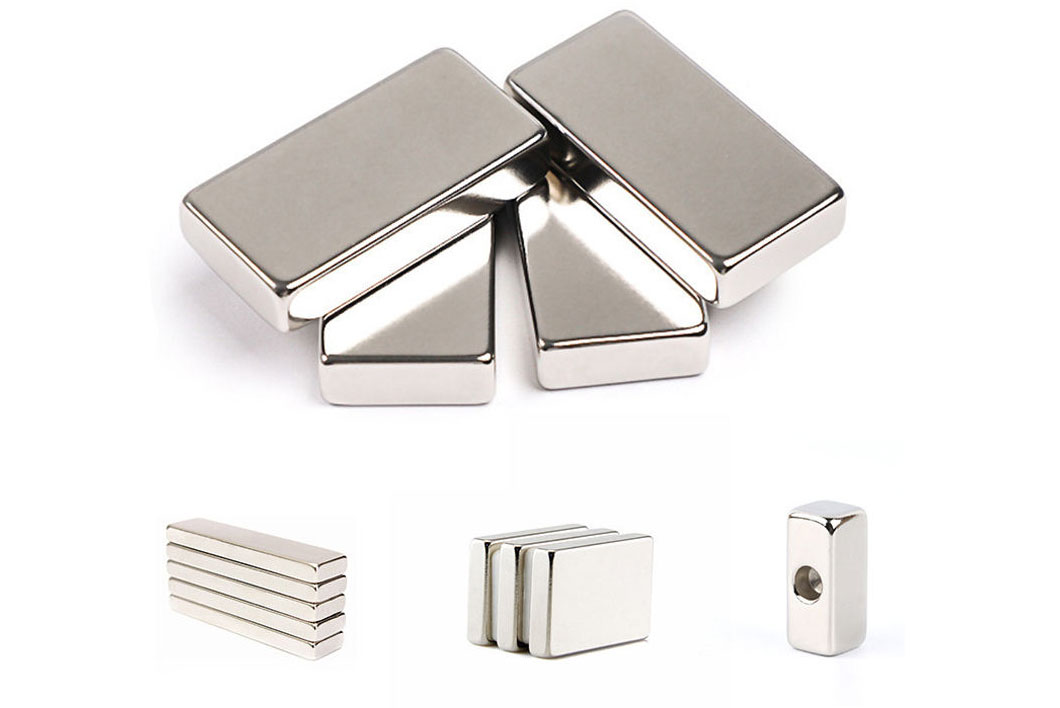
Block magnets are favored for their flat surfaces, strong holding force, and ease of mounting.
The rectangular and square magnets can be magnetized along their thickness, length, and width. The flat faces of the magnets ensure good contact area for adhesive bonding, clamping, and embedding in mechanical casings. The block magnets have various applications in fixtures, magnetic chucks, separators, holding assemblies, and magnetic closures.
The precise control of the pole direction due to the shape of the magnet makes the block magnets suitable for assemblies that require directional fields and/or modular stacking configurations.
4. Countersunk Magnets: Secure Mechanical Integration
Countersunk magnets are specifically designed for easy and reliable mechanical fastening.
The conical hole of the magnet enables the flat head screw to be flush with the magnet surface. This eliminates the movement of the magnet due to vibration. The countersunk magnets have applications in automation fixtures, door latches, mounting brackets, and removable panels.
The advantage of the countersunk magnet is not related to the optimization of the magnetic field but rather to the mechanical convenience. This makes the magnet suitable for permanent mounting.
5. Arc Magnets: Concentrated Fields for Rotating Machinery
Arc magnets are curved segments designed primarily for motors and generators.
These are designed to fit a rotor or a stator's curvature. They are then magnetized radially or tangentially. The arc shape enables it to efficiently fit a circular shape, thus providing a highly efficient magnetic field.
The arc magnet plays a critical role in the operation of a brushless DC motor, permanent magnet synchronous motors, and wind turbine generators.
6. Horseshoe Magnets: Concentrated Fields Between Poles
Horseshoe magnets are classic examples of geometry used to concentrate magnetic flux.
The U-shape of a horseshoe magnet allows for a significant concentration of the magnetic field between the two ends. This concentration makes it useful for lifting, holding, and demonstration purposes.
The horseshoe magnet shape is used in lifting magnets, magnetic clamps, and other applications. The shape allows for maximum attraction force while keeping the stray field low. The efficiency of this shape makes it useful for localized holding.
7. Rod and Cylinder Magnets: Directional Fields and Deep Penetration
Rod and cylindrical magnets are used when a long, directional magnetic field is required.
The shape of this magnet allows it to be magnetized axially. The shape also enables it to penetrate deeper into a material. The magnet is used in magnetic separators, magnetic traps, flow meters, level sensors, and other applications.
The shape of this magnet makes it useful in separating ferromagnetic materials from liquids or powders. The efficiency of this shape makes it useful in contamination control applications.
8. Sphere Magnets: Isotropic Fields and Alignment Applications
Sphere magnets generate uniform magnetic fields in all directions.
Because of their perfect symmetry, sphere magnets produce isotropic field patterns and are often used in educational demonstrations, scientific experiments, and specialized bearing or alignment systems. They are also popular in modular magnetic toys and research applications where rotational freedom and uniform attraction are required.
While not commonly used in industrial machinery, sphere magnets provide unique advantages in alignment-sensitive or multi-directional coupling applications.
9. Pot and Cup Magnets: Shielded Fields and Maximum Holding Force
Pot magnets combine a magnet with a steel housing to concentrate and shield the magnetic field.
The steel cup directs the flux toward the working surface, dramatically increasing holding force while reducing stray fields on the backside. Pot magnets are widely used in clamping systems, mounting fixtures, sensors, and signage.
Their compact size and high holding capacity make them ideal when strong attraction is required in confined spaces.
Conclusion
From arc magnets driving high-efficiency motors to countersunk magnets enabling secure mounting and horseshoe magnets delivering concentrated fields, each geometry serves a distinct purpose. By understanding how shape affects performance, designers can unlock the full potential of magnetic materials and create systems that are not only stronger and more efficient but also easier to assemble and maintain. For more strong magnets, please check Stanford Magnets. Customization is also available.
Summary Table
|
Magnet Shape |
Field Distribution & Magnetic Behavior |
Structural / Mechanical Advantages |
Typical Applications |
|
Disc (Round) |
Balanced, symmetrical axial field on both flat faces; predictable attraction force |
Simple geometry, easy stacking, good surface contact |
Sensors, loudspeakers, small motors, couplings, laboratory fixtures |
|
Ring |
Symmetrical axial field with central void; uniform flux around circumference |
Allows shafts, fasteners, or wiring through center; good concentric alignment |
Brushless motors, encoders, magnetic bearings, speakers, rotary sensors |
|
Block / Rectangular |
Directional field depending on magnetization; strong holding force over flat surfaces |
Flat faces for bonding or clamping; easy to orient poles |
Magnetic chucks, separators, fixtures, closures, industrial holding systems |
|
Countersunk |
Localized axial field similar to disc or block shape |
Flush mounting with screws; excellent vibration resistance |
Automation fixtures, removable panels, door latches, mounting brackets |
|
Arc (Segment) |
Radial or tangential field concentrated in curved air gaps |
Matches rotor/stator curvature; high field efficiency |
Brushless DC motors, synchronous motors, generators, wind turbines |
|
Horseshoe (U-shaped) |
Highly concentrated field in the pole gap; minimal stray flux |
Strong localized holding force; easy access to poles |
Lifting magnets, clamps, educational demos, magnetic tools |
|
Rod / Cylinder |
Directional axial field with deep field penetration along length |
Effective particle capture; good insertion into pipes or housings |
Magnetic separators, traps, flow meters, level sensors, filtration systems |
|
Sphere (Ball) |
Isotropic, uniform field in all directions |
Free rotation; self-aligning behavior |
Educational models, alignment systems, specialty bearings, toys |
|
Pot / Cup |
Focused field toward working face; shielded backside field |
Very high holding force in compact size; reduced stray fields |
Clamping fixtures, mounting bases, sensors, signage, industrial holders |
|
Segment / Custom Shapes |
Engineered field gradients and tailored flux paths |
Optimized performance for complex geometries |
EV motors, MRI systems, aerospace actuators, precision scientific instruments |