

How Neodymium Super Magnets Are Reshaping the Modern World
Have you ever wondered how today's cordless vacuum cleaners pack a motor the size of your fist but deliver suction just as strong as those big, bulky vacuums from the past? Or how a coin-sized magnet can hold up objects that weigh dozens of kilograms? The answer isn't hidden in complex circuits or fancy algorithms. It's hidden in a material that looks unassuming but packs an unbelievable punch — powerful magnets.
Among the family of these powerful magnets, the absolute king at the top of the pyramid is the neodymium super magnet. It's tiny, but its magnetic field is mind-blowingly strong.
Why Are Neodymium Magnets So Strong?
Neodymium magnets belong to the rare earth magnet family. The term "rare earth" doesn't mean they're hard to find — it just means the raw material used to make them, neodymium (Nd), is part of the rare earth series on the periodic table. The core composition of a neodymium magnet is Nd₂Fe₁₄B (neodymium, iron, and boron). This special crystal structure allows the magnetic domains inside the magnet to line up in a highly uniform way, which produces an extremely powerful magnetic field.
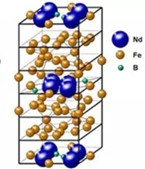
Fig 1. The Crystal Structure of the Nd2Fe14B Neodymium Magnet
Think of it this way: a traditional black ferrite magnet is like a regular flashlight — the beam is soft and spreads out. A neodymium magnet, on the other hand, is like a laser — the energy is highly concentrated, and its magnetic field is typically 5 to 10 times stronger than a ferrite magnet. A strong magnet the size of your fingernail can lift a piece of iron that weighs over 600 times its own weight. That's why these Earth magnets are widely recognized as the strongest permanent magnetic materials you can get today.
How Neodymium Magnets Are Changing Modern Life
Neodymium super magnets aren't some fancy lab curiosities. They've quietly worked their way into every corner of modern life.
- Green Technology: In the drive motors of electric vehicles, dozens of neodymium magnets work together to convert electricity into powerful, efficient motion. Wind turbines also rely on giant powerful magnets to generate stable electricity without external excitation, helping drive the global clean energy revolution.
- Consumer Electronics: The subtle vibration feedback you feel on your phone comes from tiny neodymium magnets inside a linear vibration motor. Many high-end dynamic Hi-Fi headphones use strong magnets to deliver high sensitivity, letting you hear every tiny musical detail. And your computer's hard drive uses neodymium magnets to precisely control the arm that reads and writes data.
- Industrial and Medical: That multi-million dollar MRI machine at the hospital? Its core is a massive, super-uniform magnetic field — generated by specially designed arrays of neodymium super magnets. It lets doctors see soft tissue structures inside the human body without making a single cut, saving countless lives.
How to Choose the Right Neodymium Magnet
Even though Earth magnets perform amazingly well, one size doesn't fit all. Picking the wrong grade or ignoring their weaknesses can lead to early failure.
- Heat Sensitivity: Neodymium magnets have a well-known weakness — they hate high heat. Standard grades (like N35) start losing their magnetism irreversibly above 80°C. That process is called demagnetization. If you need the magnet to work inside a motor or an engine bay, you absolutely must choose a high-temperature grade.
- Corrosion Issues: Plain neodymium-iron-boron material rusts very easily. In humid air, it can start turning to powder in just a few days. That's why almost all powerful magnets of this type have to be coated. Nickel plating is the most common all-purpose choice — it looks good and protects well. Zinc plating costs less and works fine for dry indoor use. Epoxy coatings are better for harsher environments like outdoor or underwater equipment.
- Magnetization Direction: The strongest magnetic field from any strong magnet isn't spread evenly. It's concentrated at the two ends of the magnetization direction. For thin, flat magnets, they're usually magnetized through the thickness. For cylinders or rings, you might need radial magnetization (where the field points outward from the center). When designing a magnetic circuit, you have to align the magnetization direction with the mechanical force direction — otherwise, you won't get peak performance.
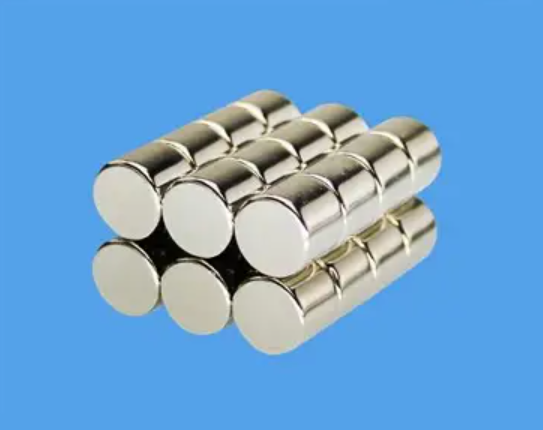
Neodymium magnets of different shapes:
- Neodymium Block Magnets
- Neodymium Cube Magnets
- Neodymium Arc Magnets
- Neodymium Disc/Cylinder Magnets With Countersunk Holes
- Neodymium Plate / Block Magnets With Countersunk Holes
- Neodymium Cylinder Magnets
- Neodymium Disc Magnets
- Neodymium Ring Magnets
- Special Shape Neodymium Magnets
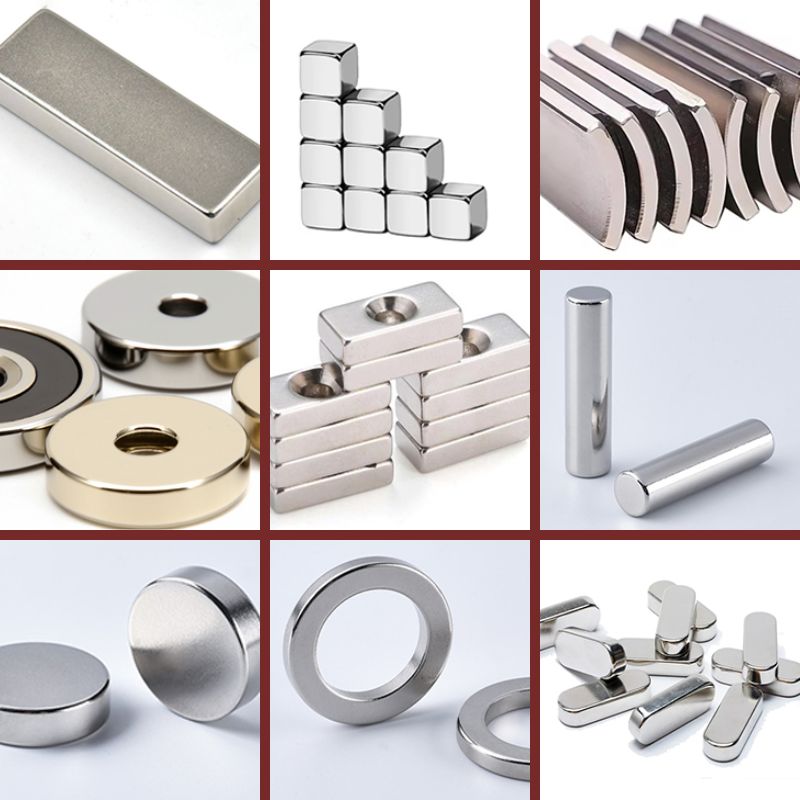
Fig 2. neodymium magnets different shapes
Conclusion
Neodymium super magnets pack incredible power into a tiny volume, making them the perfect fit for modern technology's relentless pursuit of efficiency and power density. As robotics become more sophisticated and AI hardware gets more densely packed, the role of these Earth magnets will only become more irreplaceable.
FAQs
1. I need a neodymium magnet that can handle the high heat inside an engine bay. How do I read the grade?
Look at the letter code in the grade. Regular N-series magnets only handle 80°C. M series (100°C), H series (120°C), SH series (150°C), UH series (180°C), and EH series (200°C). For example, "N35SH" means it can handle 150°C. If you need to go above 200°C, you'll have to switch to samarium cobalt magnets.
2. What's the biggest difference between neodymium magnets and regular black ferrite magnets?
The difference in size and strength is huge. To get the same amount of pulling force, a ferrite magnet needs to be about 5 to 10 times larger and heavier than a neodymium magnet. But neodymium magnets are more brittle, hate high heat, and rust easily. Ferrite magnets are cheap, corrosion-resistant, and can handle higher operating temperatures (up to 250°C or more), but their magnetic strength is much weaker.
3. Can I just throw away old neodymium magnets?
Not really. These strong magnets contain rare earth resources, so throwing them in the trash is wasteful. Plus, they might stick to the side of a garbage can or recycling equipment and cause problems. It's best to demagnetize them first or wrap them up securely and take them to an electronics waste or metal recycling facility.