

Threaded Magnet Application Guide: Types & Uses
What Makes Threaded Magnets Different?
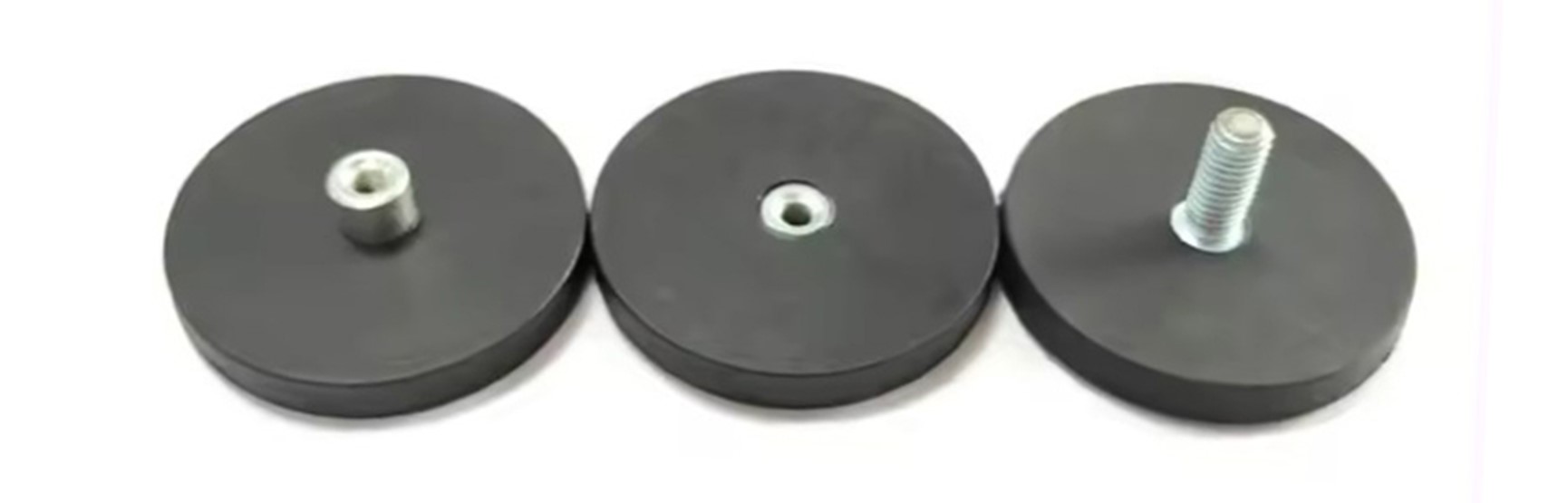
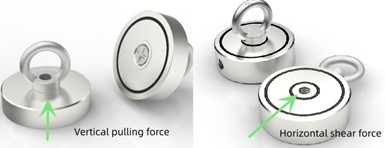
Regular magnets usually rely on double-sided tape or just stick directly onto a surface. But in places with oil, high heat, or where you need something to hang vertically, they can easily lose grip or not be able to handle much weight. And once they're stuck, removing them can be a real pain. To solve these real-world problems, threaded magnets were designed. They're easier to secure and easier to remove. Threaded magnets have a steel casing with internal or external threads, combining magnetic force with a standard mechanical connection point. Depending on the application, they come in four types: externally threaded magnets, internally threaded magnets, stud magnets, and plain stud magnets.
Let's start with a quick look at how these four types are built.
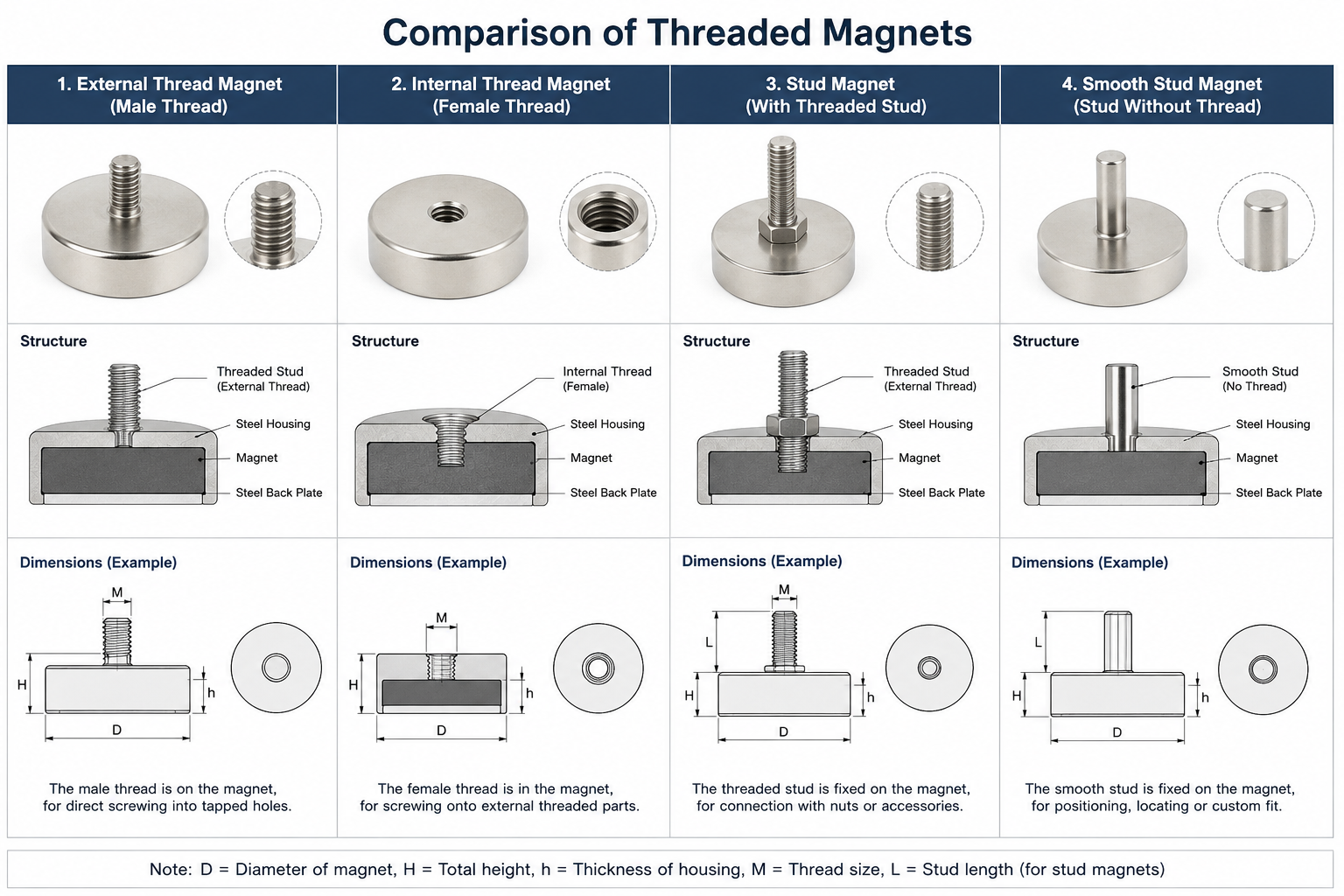
Fig 1. Threaded Magnet Structure Breakdown & Comparison
Looking at this diagram, some of you might be wondering. Doesn't an externally threaded magnet look exactly like a threaded stud magnet? Not quite. We'll explain the difference below.
1. Externally Threaded Magnets
Externally threaded magnets have threads machined directly onto the magnet housing, kind of like a bolt. You can screw them directly into a pre-tapped hole or nut. Just thread the magnet into the hole and tighten by hand or with a tool. Installation and removal are both super easy.
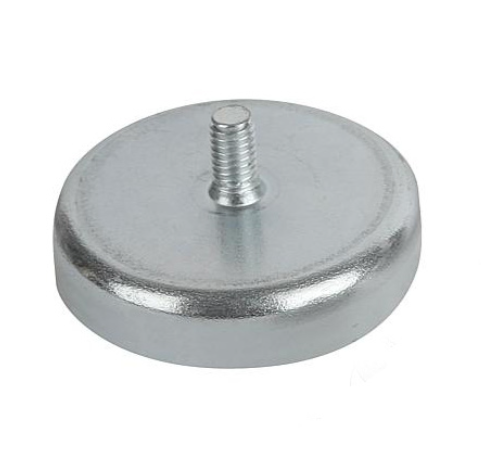
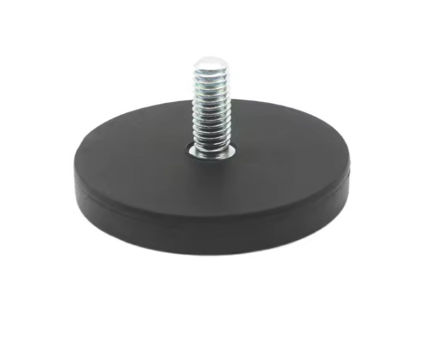
Fig 2. Externally Threaded Magnet
Common thread sizes include M4, M5, M6, M8, M10, etc. The magnet core is typically ferrite or neodymium.
Applications for Externally Threaded Magnets
These are a good fit when you need to mount a magnet into an existing threaded hole.
- In automated production lines, externally threaded magnets can be screwed directly into gripper arms or robotic end effectors for temporarily picking up and positioning metal parts.
- In equipment manufacturing, they can be installed on threaded ports of machinery to hold inspection panels or protective doors in place.
- In commercial displays, externally threaded magnets can be screwed into the threaded holes of display stands or light fixtures, letting them stick to metal ceilings or columns.
2. Internally Threaded Magnets
Internally threaded magnets have a threaded hole right in the center of the housing — kind of like a nut. This design lets you screw in all kinds of externally threaded accessories, such as eyebolts, hooks, connecting rods, or sensor probes. It makes it really easy to expand functionality. Common internal thread sizes include M3, M4, M5, M6, M8, etc.
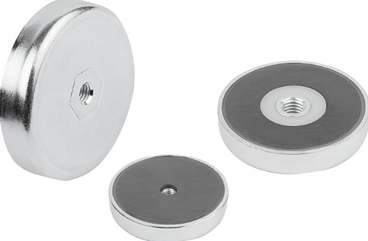
Fig 3. Internally Threaded Magnet
Applications for Internally Threaded Magnets
The main advantage here is that you can swap out different functional modules.
- For lifting tasks, screw an eyebolt into the internal thread, and the magnet becomes a temporary lifting device for moving steel plates, molds, or iron workpieces.
- For jigs and fixtures, one internally threaded magnet base can accept different threaded accessories to hold various workpiece shapes — basically "one magnet, many uses."
- For equipment integration, internally threaded magnets are often used to mount proximity switches, temperature sensors, and other components onto metal frames.
- For storage and organization, screw a hook into the magnet and use it to hang tools, signs, or cables.
3. Threaded Stud Magnets
Stud Magnet vs. Externally Threaded Magnet
A stud magnet (threaded type) has a protruding stud on the housing, with threads cut into that stud. A regular externally threaded magnet has threads machined directly into the housing itself. But with a stud magnet, the metal stud is welded or glued onto the magnet body. That makes the stud stronger against shearing forces.
Also, unlike externally threaded magnets, the threaded section on a stud magnet is usually longer. The stud is designed as a separate extension that goes through a mounting hole and gets secured with a nut on the other side.
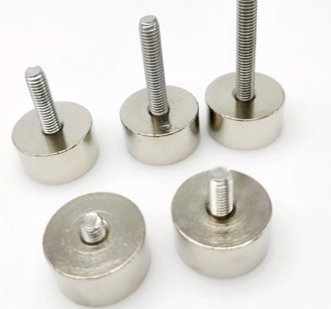
Fig 4. Externally Threaded Stud Magnet
Common stud diameters and thread sizes include M4, M5, M6, M8, M10, etc. Stud length is usually between 10mm and 30mm.
Applications for Threaded Stud Magnets
Stud magnets are a great choice when you need to mount a magnet onto a non-metallic panel, like plastic, wood, aluminum, or composite materials. Since these materials can't be easily tapped, here's what you do: drill a hole slightly larger than the stud diameter, push the stud through the hole, and tighten a nut on the back side. That locks the magnet onto the surface. This method saves you from having to cut threads into the material, which cuts down on both difficulty and cost.
Examples:
- Mounting a stud magnet onto a plastic control cabinet panel to hold the door closed.
- Installing stud magnets onto plastic automotive interior trim to hold carpets, soundproofing pads, or decorative panels.
- Attaching stud magnets to a wooden display stand for swap-out signs or price tags.
- Mounting stud magnets onto non-metallic instrument housings for holding access panels in place.
How to use: Drill a through-hole in the mounting panel, push the magnet's stud through the hole, add a washer and nut on the other side, and tighten with a wrench.
4. Plain Stud Magnets
Plain stud magnets have a smooth, threadless cylindrical stud. Since you can't lock them down with threads, these magnets are meant for permanent mounting using a riveting process. Basically, you push the stud through a hole in the panel, then use a riveting tool to hit the end of the stud. That deforms the stud plastically, making it expand and lock the magnet firmly onto the panel. Common plain stud diameters are 3mm, 4mm, 5mm, etc. The length depends on the panel thickness.
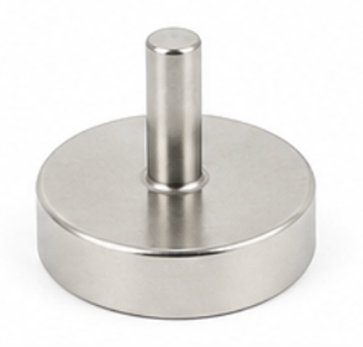
Fig 6. Plain Stud Magnet
Applications for Plain Stud Magnets
Use plain stud magnets when you need a permanent mount that won't be removed later. These applications typically require a strong connection and have limited installation space.
- In appliance manufacturing, plain stud magnets are riveted into the plastic inner liner of refrigerator doors. They work with the metal strip inside the door gasket to hold the door closed magnetically.
- In automotive manufacturing, plain stud magnets are riveted onto the back of door trim panels or plastic dashboard parts to hold against metal body panels — reducing gaps and rattles.
- In consumer electronics, plain stud magnets are embedded into plastic housings to hold removable accessories or covers in place.
- In furniture manufacturing, plain stud magnets can be riveted inside wooden furniture for a hidden magnetic closure with no visible hardware.
Once a plain stud magnet is riveted in place, you can't remove it. So make sure you've nailed down the mounting location during the design phase.
Selection Summary
|
Type |
Structure |
Mounting Method |
Removable? |
Best for |
Typical Uses |
|
Externally Threaded Magnet |
Housing has external threads |
Screw into tapped hole |
Yes |
Metal parts / pre-threaded components |
Gripper arms, sensor brackets |
|
Internally Threaded Magnet |
Housing has internal threaded hole |
Screw in external threaded accessory |
Yes |
Applications needing modular add-ons |
Eyebolts, hooks, sensors |
|
Threaded Stud Magnet |
Extended stud with external threads |
Push through hole & tighten nut |
Yes |
Plastic, wood, aluminum panels |
Panel mounting, interior trim |
|
Plain Stud Magnet |
Smooth, threadless stud |
Riveting |
No |
Plastic parts / thin panels |
Refrigerator door seals, car interiors |
Threaded magnets are a great solution for securely mounting and fixing magnets. Besides threaded magnets, Stanford Magnets also offers options with hooks, snap hooks, clips, and adhesive backing.