

Magnetic Applications in Robotics
By the year 2026, robots have already become integrated into almost all aspects of human lives, from robotic arms on the factory floor to miniaturized robotic instruments in operating theatres in hospitals, to even humanoid robots that walk down streets. The evolution has been brought about by both advancement in artificial intelligence software and also an equally important, yet oftentimes unnoticed core ingredient—magnetic materials.
Why Magnets Are a Game-Changer in Robotics
Permanent magnet technology provides improved power in terms of strength, size, precision, and efficiency for robots.
1. Small Size, Lightweight, and Extraordinary High Power Density
This is the most important feature of permanent magnets. The rare-earth magnetic materials, such as Neodymium-iron-boron (NdFeB), create very high magnetic fields that store much more energy compared to any other alternative.
2. High Efficiency, Minimal Heat Generation, and Energy Saving
The permanent magnet rotor already possesses its own magnetic field and, therefore, it does not require additional power supply for creating magnetic field unlike traditional electrically excited motors.
3. High Dynamic Performance and Precise Control Ability
The magnetic field of a permanent magnet is created instantly without any delay. And with advanced technology of servo control, permanent magnet synchronous motors demonstrate extremely high starting and stopping abilities, rapid acceleration and deceleration and reversing.
4. Simple Design and Reliability
There are no brushes, slip rings and other electrical contact elements that tend to be prone to wear on the permanent magnet rotor. It means minimal maintenance.
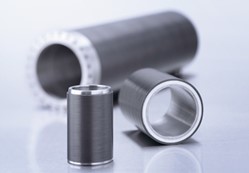
Permanent Magnet Rotors and Servo Motors
Every single joint in a robot relies on a small but powerful servo motor to drive it. And the "heart" of that motor is the permanent magnet rotor, typically made from rare-earth magnetic materials such as NdFeB.
Why are these motors necessary for robotics? The reason is that the magnet NdFeB provides extremely high energy density, which means that it can create a strong magnetic field in a very small space. It means that the motors can be compact and light but at the same time produce huge torque, which is just what the robots need – compact size, light weight, and high power of output.
Just consider the humanoid robots, one humanoid robot needs more than 40 such motors, with each element needing about 3-4 kilograms of high-grade NdFeB. This is the main reason why the rare-earth magnets attracted so much interest from the robotics sector.
In addition to this, modern robots need to "feel" external forces and positioning, which is done through magnetic sensors that are placed in the motor. With their help, micro-level positioning is ensured.
Magnetic Soft Robots
When robots are scaled down to the millimeter level, or when they need to navigate complex environments such as the inside of the human body, conventional rigid motors begin to fall short. That's where magnetic soft materials offer a unique solution.
External magnetic fields can penetrate human tissue to remotely control these miniature robots, enabling them to perform surgical tasks such as moving, grasping tissue, and releasing drugs—all with minimal harm to the body. This technology opens up entirely new possibilities for future non-invasive surgeries.
About Stanford Magnets
As a professional supplier of magnetic materials, Stanford Magnets has long been committed to providing high-performance permanent magnet rotors and magnetic assemblies for the high-efficiency motor industry. Its product portfolio includes advanced materials such as NdFeB and samarium-cobalt, with rotor outer diameters up to 450 mm and magnet grades offering high-temperature-resistant options like 38UH. The company also supports custom manufacturing to customer drawings.
Whether for industrial robot joint motors or specialty applications such as linear motors and stepper motors, Stanford Magnets offers end-to-end solutions—from material selection to component manufacturing—making it a trusted magnetic component partner in the robotics supply chain.