

What Are Neodymium Cylinder Magnets Used For?
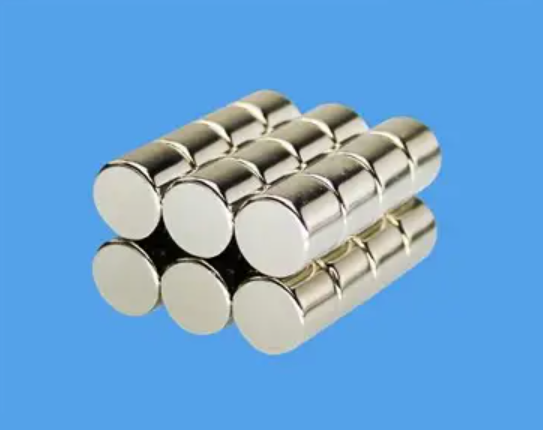
Neodymium cylinder magnets are one of the most versatile magnet shapes available. These round magnets are endowed with the flexibility of being inserted into housing through press fit or glueing, while the small size provides a strong holding force within tight spaces. That combination makes them a go-to choice across consumer electronics, industrial equipment, medical devices, and everyday products.
Neodymium Cylinder Magnets for Consumer Electronics and Audio
This is where neodymium cylinder magnets show up most often.
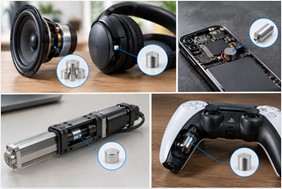
Speakers and headphones rely on them as the core of the driver unit. The magnet generates a stable magnetic field that drives the voice coil, producing sound. Their small size and high strength allow manufacturers to build slim speakers without sacrificing output.
Vibration motors in phones and wearables use neodymium cylinder magnets to convert electrical signals into mechanical motion. The same principle applies to linear actuators and haptic feedback modules in gaming controllers and touchscreens.
Neodymium Cylinder Magnets for Industrial Automation and Motors
In industrial settings, neodymium cylinder magnets handle sensing, driving, and holding tasks.
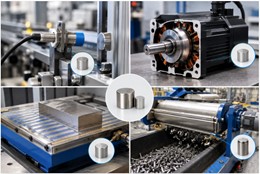
Sensors for position, speed, and proximity detection use neodymium cylinder magnets because they produce a consistent, predictable field. Electric motors—including servo, brushless, and automotive motors—rely on them for torque generation. Magnetic chucks and magnetic separators use their strong holding force to clamp workpieces or sort ferrous materials.
Neodymium Cylinder Magnets for Medical Devices
Medical equipment demands more than just magnetic strength. Neodymium cylinder magnets used in medical devices must be coated or encapsulated to meet biocompatibility standards.
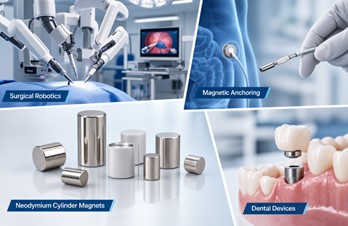
Common applications include:
- Surgical robotics — actuators and haptic feedback systems
- Magnetic anchoring — used in minimally invasive procedures and implantable ports
- Dental devices — magnetic attachments for prosthetics and temporary screws
These magnets typically require Parylene or gold coatings and must pass ISO 10993 testing before they can be used in contact with tissue.
Neodymium Cylinder Magnets for Everyday Products and DIY
Small neodymium cylinder magnets are widely used in:
- Magnetic clasps for bags, jewelry boxes, and packaging
- Tool holders and magnetic strips for workshops
- Model making and DIY projects where strong, compact magnets are needed
- Refrigerator magnets and other decorative applications
Their ability to be embedded into thin materials makes them ideal for invisible closures and mounting systems.

Frequently Asked Questions
What sizes do neodymium cylinder magnets come in?
They range from micro magnets under 1 mm in diameter to large cylinders over 50 mm. Common stock sizes include 5×2 mm, 10×3 mm, 15×5 mm, and 20×5 mm.
What does the size notation mean?
It's usually written as diameter × thickness. For example, "10×3 mm" means a 10 mm diameter and 3 mm thickness.
Can neodymium cylinder magnets be used in high-temperature environments?
Standard grades work up to 80°C. For higher temperatures, choose SH, H, or M grade magnets that can handle 100–150°C.
How do I choose between axial and radial magnetization?
Axial magnetization (poles on the flat faces) is standard and suits most holding and sensing applications. Radial magnetization (poles on the curved sides) is used for specialty sensors and motors.
Are neodymium cylinder magnets safe for medical use?
Not in bare form. They must be coated or encapsulated and pass ISO 10993 biocompatibility testing before use in medical devices.
Stanford Magnets specializes in manufacturing and supplying neodymium cylinder magnets applied in various industrial applications. We have advanced technology, rich experience, and professional engineering technicians in this field.
Looking for a certain size? If you require a specific size that is not available on our website, please contact us for a custom magnet quote.