

What Can Magnetic Repulsion Actually Be Used For?
When two magnets face each other with the same poles, they push each other away. This "pushing" force has plenty of clever uses in industry and everyday life.
The core idea is simple: use "like poles repel" to achieve contactless force transfer, cushioning, or levitation.
Magnetic Repulsion Makes Things Float
Maglev is the most intuitive use of repulsion.
Put two magnets with the same poles facing each other, and the top one gets pushed up. If the forces balance just right, the object can hover in midair, completely out of contact with the surface below.

Maglev trains are the most famous example of magnetic repulsion. Magnets on the bottom of the train and on the track repel each other, lifting the train off the ground. This eliminates wheel-rail friction and lets it reach incredibly high speeds.
Maglev bearings work on a similar principle. The shaft and the bearing are held apart by repulsion, with no mechanical contact and almost no wear, which is perfect for high-speed equipment.
There are also maglev display stands, where art pieces or globes float and slowly spin in the air, held up by the repulsion between magnets in the base and the top.
Maglev Artificial Hearts in Medicine
Magnetic levitation is also making its way into medicine. The maglev artificial heart pump is a particularly remarkable application. The rotor inside the pump is suspended by magnetic repulsion and touches no mechanical bearings. The benefit: no debris from bearing wear, which lowers the risk of blood clots. For patients who need a long-term artificial heart, this is absolutely critical.
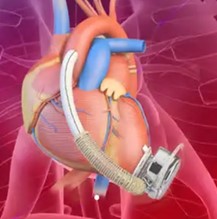
maglev artificial heart
Magnetic Repulsion Can Cushion and Absorb Shock
When two magnets with the same poles face each other, the closer they get, the stronger the repulsion, which absorbs impact. Exactly, magnetic shock absorbers use this principle. When vibration or impact hits, the repulsion between the magnets cancels out some of the energy and provides a cushioning effect. And since there's no mechanical contact, there's no wear, so they last a long time.
Some maglev cushioning devices are also used in precision equipment to keep vibrations from reaching sensitive components.
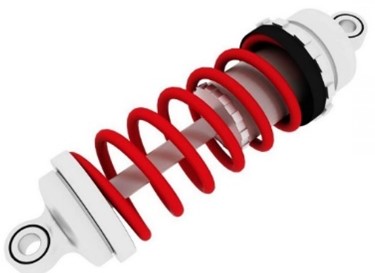
magnetic shock absorbers
Magnetic Repulsion Can Transmit Power Through the Air
Repulsion can also transmit power without any mechanical connection.
Magnetic pumps are a classic example. A motor spins an outer magnet, and an inner magnet inside the pump housing spins along with it, with a sealed barrier between them. Because the power is transmitted magnetically, there's no shaft poking through the pump body, so leaks are eliminated. In the chemical and pharmaceutical industries, magnetic pumps are practically standard for moving corrosive or toxic liquids.
Magnetic couplings follow the same idea. The driving shaft and the driven shaft are linked magnetically through a gap, making them ideal for situations that require isolation or sealing.
Magnetic Repulsion Enables Contactless Valve and Switch Control
Magnetic valves use repulsion to control opening and closing. The fluid never directly touches the mechanical structure, preventing corrosion and contamination.
Some magnetic switches and sensors are also triggered by repulsion. When two magnets get close enough, the repulsive force pushes a contact to close or open, controlling a signal.
Magnetic Repulsion in Toys and Consumer Products
Maglev tops, magnetic building blocks, maglev speakers... these products use repulsion to create a floating effect, visually striking and just plain fun.

The Limitations of Repulsion
Why isn't magnetic repulsion used everywhere? Because it has a built-in weakness. It's unstable.
Attraction can lock an object firmly in place, but repulsion can't. The slightest shift and the object gets pushed even further off. It's very hard to keep it stably suspended.
So in real applications, you usually need multiple sets of magnets working together, or superconducting materials to lock the floating position. That's why maglev train technology is extremely difficult, while a simple maglev toy is actually pretty easy to make.
Summary
Magnetic repulsion is essentially a contactless pushing force. Its applications fall into a few categories:
• Levitation: maglev trains, bearings, display stands
• Cushioning: shock absorbers, damping devices
• Transmission: magnetic pumps, couplings
• Control: valves, switches, sensors
• Medical: artificial heart pumps
Repulsion may not be as easy to control as attraction, but in situations that require no contact, no wear, and no leaks, it's virtually irreplaceable.