

Industrial Uses of Permanent Magnets
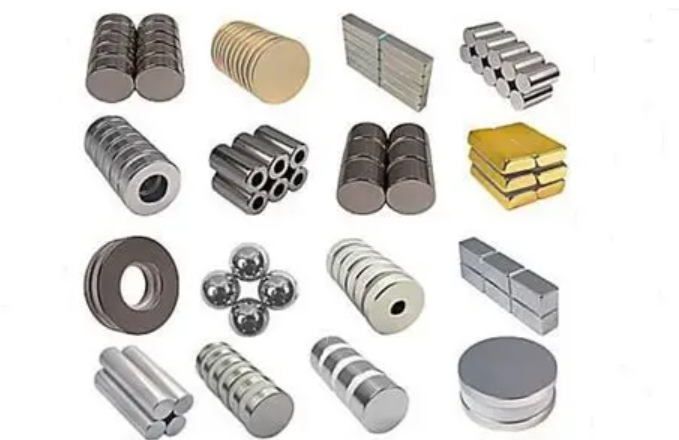
Permanent magnets are considered keystone elements in modern industrial systems and are used from heavy manufacturing applications to the most advanced electronic devices. Being able to maintain consistent magnetic performance under continuous operations makes them ideal for motors, sensors, material handling, and measurement systems, which provide both operational efficiency and reduced maintenance demands.

1. Electric Motors and Generators
The permanent magnet is a critical ingredient in electric motors and generators because they replace rotor windings and eliminate the need for excitation currents, therefore reducing electrical losses, minimizing heat generation, and enabling motors to have higher torque densities in a smaller footprint compared to conventional induction motors. In generators, permanent magnets simplify the design and improve efficiency, particularly at variable speeds.
The permanent magnet motors find their applications in robotics, compressors, pumps, HVAC systems, and electric vehicles. For instance, NdFeB-based motors in industrial screw compressors could ensure energy gain up to 8%, but direct-drive permanent magnet generators in offshore wind turbines reduce the need for maintenance by dispensing with gearboxes and partial-load performance.
2. Industrial Automation and Robotics
Permanent magnets are highly important for precise motion control since their generated magnetic field is predictable and homogeneous, which helps in achieving accurate positioning, fast response, and repeatable performances. They form the core of servo motors, stepper motors, and linear actuators where strong and compact magnetic fields translate into motion efficiency.
In actual practice, rare-earth magnets are used in robotic arms and CNC machines to provide high torque in small motor housings, thus allowing faster cycle times and higher payload capacities. Magnetic encoders and sensors in both systems give immediate feedback on speed, position, and direction for super-accurate closed-loop control in advanced manufacturing environments.
Related reading: 6 Uses of Permanent Magnets In Everyday Life
3. Magnetic Separation and Material Processing
The principle of magnetic separation is based on the ability of permanent magnets to attract ferromagnetic and weakly magnetic particles by providing an efficient way to remove contaminants from bulk materials selectively. Magnetic fields of high intensity can operate in continuous mode without electrical power, hence being energy-efficient and robust.
Induction magnets are applied industrially to separate iron ore in mining, to remove steels from mixed waste streams in recycling, and to eliminate metal contaminants from end products in food processing. Some examples of rare-earth magnetic separators can pick up fine stainless steel particles at 1.4 Tesla magnetic flux density, which enhances product purity and protects downstream equipment.
4. Electrical and Electronic Equipment
Permanent magnets are a source of stable magnetic fields, which allow several electronic and electrical devices to work. They serve to transform electrical energy into mechanical movement and vice versa, perform switching functions, and guide the magnetic flux with precision in sensitive circuits.
In industry, permanent magnets are found in loudspeakers, microphones, relays, circuit breakers, and transformers. Magnetic latching relays, for example, hold their position without continued power consumption, saving energy, while magnetic shielding components control electromagnetic interference in sensitive instrumentation and power electronics.
5. Lifting, Holding, and Clamping Systems
Permanent magnets provide a constant holding force without the use of power and are thus appropriate for lifting, clamping, and securing safely and efficiently. Their capability for sustaining their force in case of a power loss enables improvement in safety during the operation of heavy load handling.
In practical applications, magnetic lifters deal with the handling of steel plates, pipes, and billets in fabrication and shipbuilding, reducing reliance on hooks or slings. Magnetic chucks and fixtures are common in machining and grinding, holding the workpiece securely and providing unobstructed access for the cutting tools.
6. Sensors, Instrumentation, and Measurement
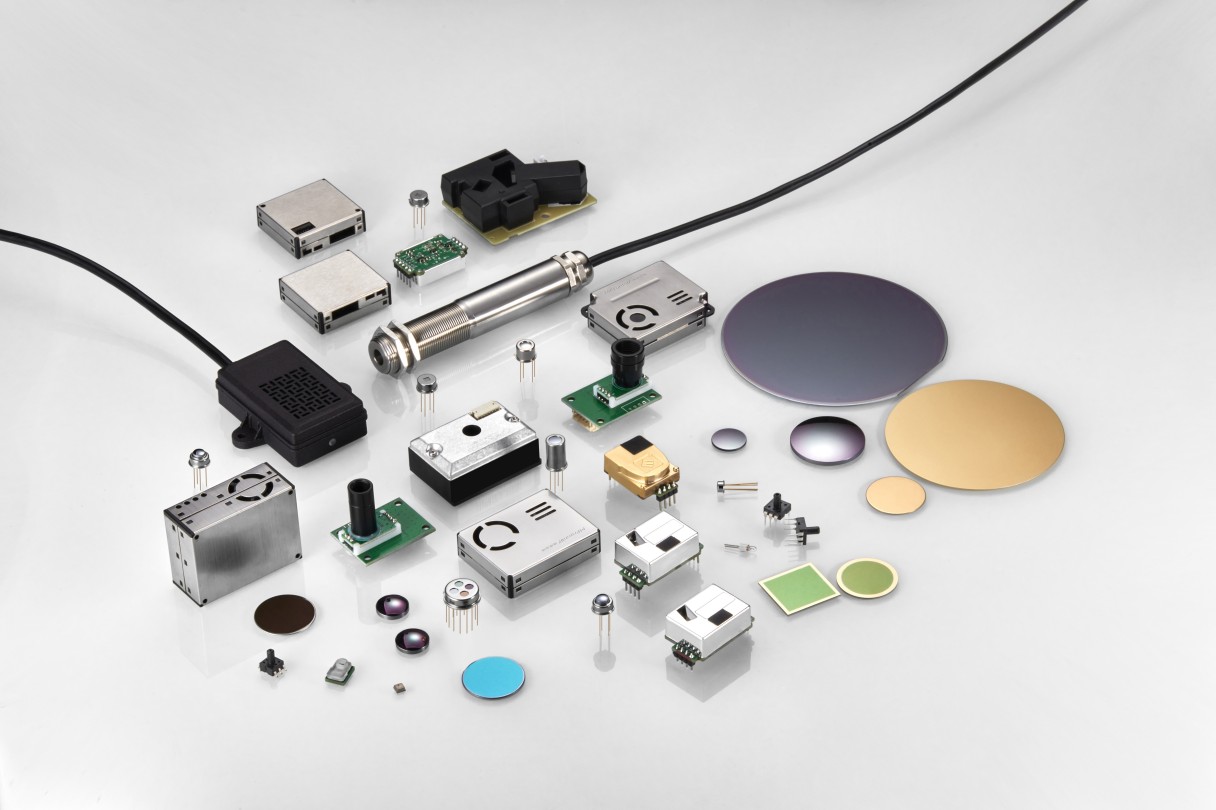
Permanent magnets are at the heart of many industrial sensors due to their production of predictable, stable magnetic fields. These fields offer a means for non-contact measurement in position, speed, and current. This improves durability and precision, especially under severe environments.
Industrial machinery, process systems, and safety interlocks are monitored in practice by Hall-effect sensors, magnetoresistive sensors, and reed switches. Permanent magnets are used in flow meters and torque sensors for non-contact measurement, which allows operation reliably at high temperature, pressure, or corrosive conditions.
7. Renewable Energy and Energy Storage Systems
Permanent magnets further renewable energy systems by availing high magnetic energy density in compact components. Their efficiency reduces mechanical losses in generators, inverters, and storage devices, hence improving their performance and lifespan.
Industrially they find application in wave and tidal generators, flywheel energy storage, and high-efficiency inverters. In wind turbines, for example, NdFeB permanent magnets make it possible to build much smaller and lighter generators with high efficiency, extending service life and reducing maintenance costs.
8. Aerospace and High-Reliability Systems
Permanent magnets used in aerospace have the high reliability that provides operational functions at extreme temperatures, in dangerous vibration conditions, and under radiation. Their magnetic properties are invariant with respect to external issues so that their performance in critical applications can never fail.
Practical applications of the SmCo magnets include actuators, guidance systems, radar equipment, and electric propulsion devices. As a result of high flux density retention with temperatures above 300°C, they are suited for aircraft control surfaces, missile guidance, and space applications.
Conclusion
From motors and renewable energy, to robotics and aerospace, permanent magnets span industries with functionality that reduces energy consumption, enhances system reliability, and even allows for compact designs. It is both a foundational and growing role in industrial innovation and optimization of systems.