


Principles and Applications of North and South Pole Magnets
While the fascinating study of magnets by scientists and engineers dates back many centuries, most people take for granted the basic concept governing their action. The simplest property common to any magnet is that it always possesses two poles: a north pole and a south pole. That duality is not an accidental characteristic but, rather, a consequence of the way in which the magnetic fields arise and interact. Thus, understanding why every magnet has two poles, how they relate, and their applications explains the importance of magnets within nature and modern technology.
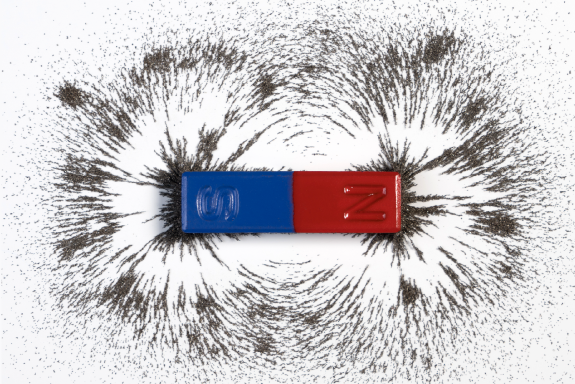
[1]
Why Every Magnet Has Two Poles
A basic concept of physics-magnetic dipoles-lies at the heart of every magnet. That is, magnetic fields come in pairs. While electric charges can exist independently as positive or negative, a magnet does not have just one pole. Every magnet has two opposite poles-one north, one south. This is due to the manner in which electrons behave within the material.
Usually, magnets are made of ferromagnetic materials, which come from iron, cobalt, and nickel. In such materials, the electrons have a property known as "spin," where they create tiny magnetic fields. When these magnetic fields are all aligned in the same direction, they form a greater, unified magnetic field. Where the magnetic field is strongest, that is called the magnetic poles. One pole of the magnet will be a north pole, and the other will be a south pole.
This interaction is not confined to the material of the magnet, for the magnetic field extends into space beyond the magnet's material and exerts a force on materials or objects in the vicinity. It is this duality of poles that underlies the strength and versatility of magnets in many different kinds of applications.
How North and South Poles Interact
It has to do with how poles on the magnets interact: opposite poles attract, whereas similar poles repel. This is the underlying reason for the behavior of magnets when placed in any environment or application.
When you bring the north pole of one magnet near the south pole of another magnet, they will be attracted to each other. They are attracted to each other because of the magnetic field lines that run from the north pole to the south pole, creating a strong attractive force between them. This is the principle of magnetic attraction applied to a wide range of usages, from simple fridge magnets to complex industrial systems.
On the other hand, when you move two north poles or two south poles near each other, they will repel. This happens because the magnetic field lines of the like poles point in the same direction, causing the magnets to push away from each other. This repulsive force of such magnets is utilized in technologies such as magnetic levitation, where the repulsion between magnets is harnessed to create frictionless motion.
Understanding the interaction between the poles of a magnet is important for developing any system using magnetic fields, whether for industrial applications or consumer products. Applications in electric motors, for example, make use of magnet technology through both attractive and repulsive relationships between poles to achieve rotational motion.
Related reading: How to Determine North And South Pole of Magnet?
Applications of North Pole and South Pole Magnets
Magnets and polar interactions are at the core of innumerable technologies in modern times. The north and south poles of magnets, and their distinctive behavior, have a great variety of applications-from common, everyday devices to innovative scientific tools.
1. Magnetic Levitation and Transportation
One of the most interesting applications of magnets is in magnetic levitation trains. It uses powerful magnetic fields to lift the train and push it forward. By taking advantage of the repulsive forces between the like poles, maglev technology allows for trains to "float" above the tracks, which not only eliminates friction but provides the ability for incredibly high speeds. This technology has already been in use in parts of the world, such as Japan and China, and could revolutionize transportation systems across the globe.
2. Electric Motors and Generators
The operation of electric motors and generators is based on the interaction of magnetic poles: in a motor, the magnetic field created by an electric current interacts with the magnetic poles of either a permanent magnet or an electromagnet. This interaction results in rotational motion, which in turn powers everything from household appliances to industrial machinery. In generators, on the contrary, mechanical motion is used to make magnets rotate, thus creating an electric current.
3. Data Storage and Magnetic Materials
Other important applications involving the use of magnets relate to data storage. Hard drives, for instance, use magnetic fields in storing data on disks. Every minute bit of data consists of a magnetic domain with a north and south pole. Changes in the orientation of these poles represent binary data (1s and 0s), which the magnetic head of the drive then reads. This technology has formed the backbone of computing storage for decades, though it is starting to be replaced by newer technologies such as solid-state drives.
Related reading: The Evolution of Hard Drive Magnetic Technology
4. MRI Machines
MRI machines make use of the magnetic properties of atoms in the body for medical imaging. Strong magnetic fields are produced, sometimes by the use of superconducting magnets, which align the protons in the body, especially those in water molecules. The use of radiofrequency pulses causes the protons to change their alignment, and the emitted signals are then used to generate detailed pictures of the interior of the body. The interaction of north and south magnetic poles is critical in producing this strong magnetic field needed in MRI scans.
5. Compasses
The most basic and historic application of magnetism is the compass, which uses the Earth's magnetic field to determine direction. The north pole of a compass needle is attracted to the Earth's magnetic south pole, which is located near the Earth's geographic north pole. This allows travelers to determine which way is north, aiding in navigation for centuries.
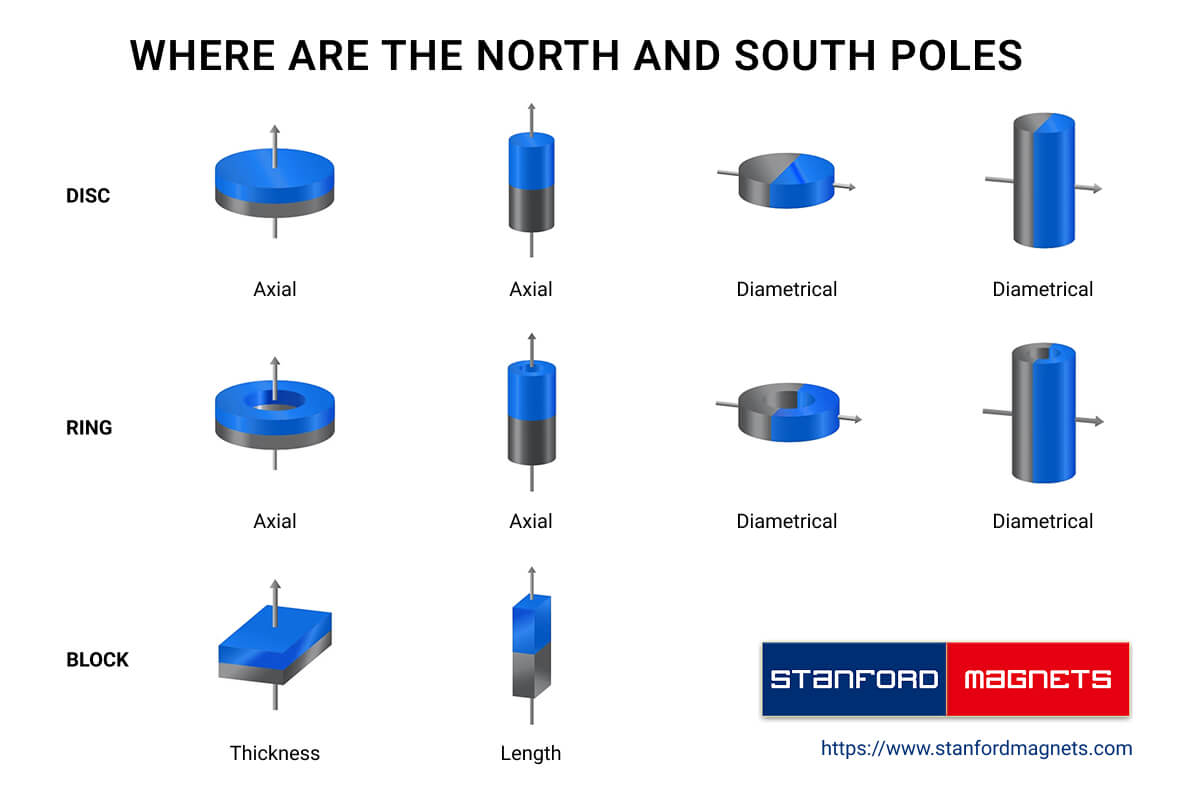
Where Are the North and South Poles on Different Magnets
A simple way to understand magnetic fields is by using the right-hand rule for determining the location of the north and south poles on a magnet. If you curl your right-hand fingers in the direction of the current (in the case of an electromagnet), your thumb points to the north pole of the magnet. For permanent magnets, the north pole is generally defined as the end that points toward the Earth's magnetic north when freely suspended.
However, for some specialized magnets, like bar magnets, it is easy to determine the poles using a compass. A needle of the compass will orient itself in the magnetic field, pointing toward the north pole of the magnet and away from the south. In large-scale magnets used in scientific experiments or in industrial applications such as MRI machines, one could make use of magnetic sensors to map the poles with great accuracy.
Conclusion
Therefore, north and south poles are not just abstract concepts but are actually widely incorporated into practical applications that affect our everyday lives, from advanced transportation systems to medical technologies and powering our electronics. Their dual-polarity nature is what allows for the function of so many devices. Through attraction and repulsion, the dynamic relationship between north and south poles is at the helm of innovation in everything from science to engineering and far beyond. As our knowledge concerning magnetism continues to grow, so too does the potential for new and exciting applications that will shape the future. For more magnet information, please check Stanford Magnets.
Reference:
[1] Monash University (2025, December 9). What is a field? Retrieved December 9, 2025.